
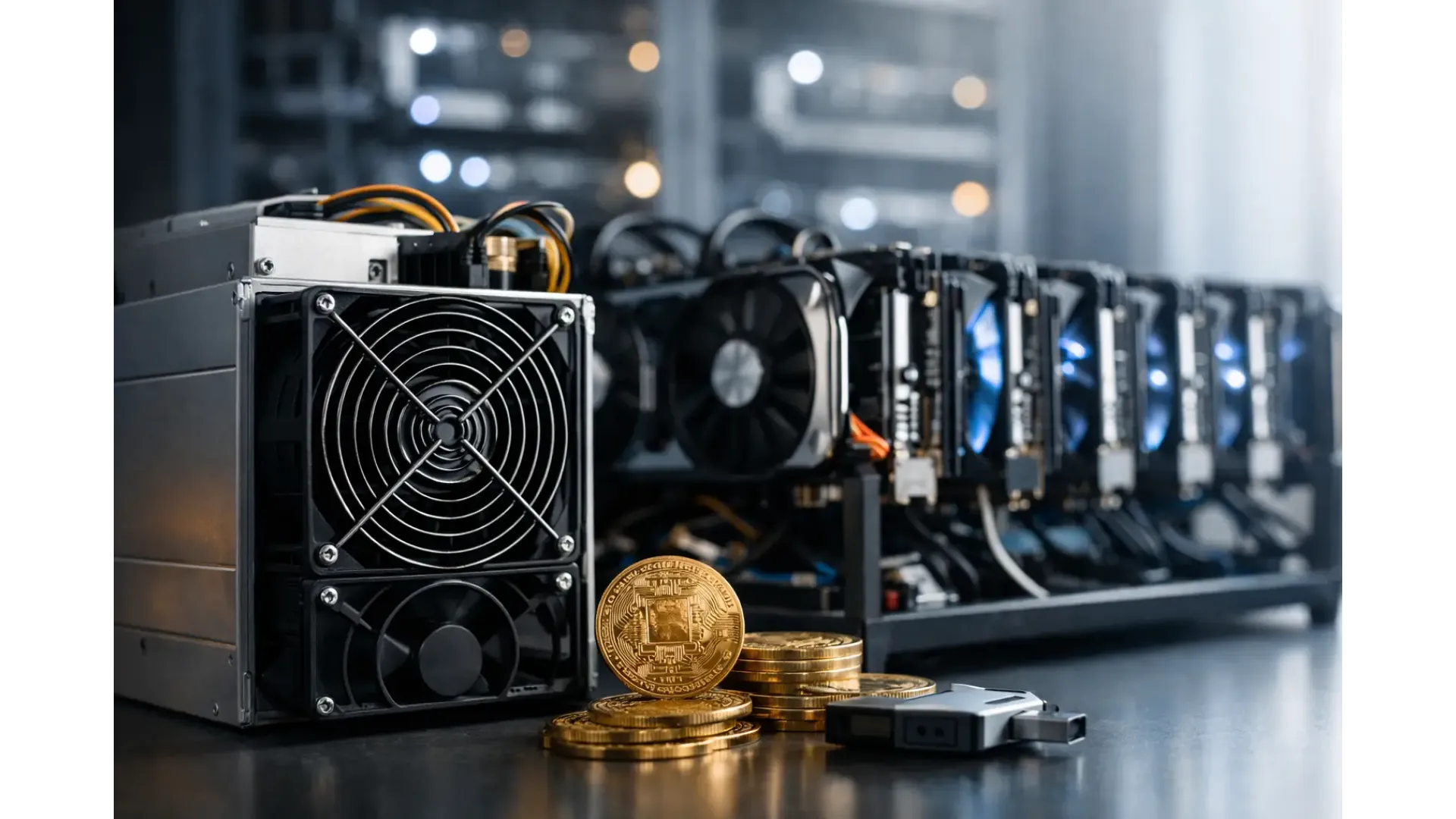
If you are pricing machines, checking power draw, or comparing ASIC models, the question is usually not abstract. What is crypto mining hardware in practical terms? It is the physical equipment used to perform the calculations that secure a blockchain network and, in return, compete for mining rewards. The exact hardware matters because mining is not a generic computing task. Profitability, noise, heat, efficiency, and setup complexity all depend on choosing equipment built for the job.
For most buyers, the term covers more than just the miner itself. It can include dedicated ASIC machines, smaller home mining devices, power supplies, control boards, fans, networking equipment, mining pool nodes, and monitoring accessories. Some setups are designed for maximum hashrate. Others are built around lower noise, lower power use, or easier home deployment. The right choice depends on what you are mining, where the machine will run, and how much hands-on management you want.
What is crypto mining hardware used for?
Crypto mining hardware is used to solve cryptographic calculations required by proof-of-work networks such as Bitcoin. When a machine completes these calculations at scale, it contributes hashrate to the network. In exchange, the miner or mining pool may earn a share of block rewards and transaction fees.
That is the technical purpose, but buyers usually think about it in operational terms. A mining device converts electricity into computational work. The better the hardware, the more efficiently it performs that work. Efficiency is why mining hardware has moved far beyond standard PCs for many coins. A general-purpose computer can run mining software, but on networks like Bitcoin, purpose-built equipment dominates because it delivers far more hashrate per watt.
The main types of crypto mining hardware
ASIC miners
For Bitcoin and other SHA-256-based mining, ASICs are the standard. ASIC stands for Application-Specific Integrated Circuit. In plain terms, it is a machine designed to do one job exceptionally well. Instead of handling a wide range of tasks like a desktop PC, an ASIC is engineered for a specific mining algorithm.
This specialisation is the reason ASICs lead the market for Bitcoin mining. They offer substantially higher performance and better energy efficiency than older GPU or CPU-based approaches. The trade-off is flexibility. If an ASIC is built for one algorithm, it cannot be repurposed easily for unrelated tasks.
For a buyer, this means an ASIC is usually the right choice when the goal is serious Bitcoin mining. It is not usually the right choice if you want a machine that can switch between gaming, rendering and mining.
GPU mining rigs
GPUs were once widely used across multiple mineable coins because they are more flexible than ASICs. A graphics card can handle many types of parallel computation, which made it useful for different mining algorithms. In some parts of the market, GPU mining still has a role.
However, for Bitcoin specifically, GPUs are not competitive against ASICs. The performance gap is too large. If someone asks what is crypto mining hardware for Bitcoin in a current retail context, the answer is overwhelmingly ASIC-based. GPU rigs are more relevant when discussing alternative networks or buyers who want broader hardware reuse.
CPU miners and small-form devices
CPU mining has limited relevance for major proof-of-work coins, but low-power devices and compact hobbyist miners still attract interest. These products are often chosen for education, solo mining experiments, low-noise operation, or home use where a full industrial ASIC setup is not practical.
This is where expectations need to stay realistic. Smaller machines can be a good fit for learning, light home mining, or participating in the ecosystem with manageable power and noise. They are not a direct substitute for high-output ASIC hardware.
Mining pool nodes and supporting infrastructure
Mining hardware is not always just the box that generates hashrate. Many miners also use dedicated node hardware or pre-configured pool node devices to improve reliability and simplify setup. A mining pool node can help route work efficiently, reduce dependency on a third-party setup process, and give the operator more control over their mining environment.
For buyers who want a cleaner deployment experience, pre-installed node equipment can remove a fair amount of friction. It is especially useful for home users and small operators who want specialist equipment without building every component from scratch.
What makes one mining machine better than another?
The headline figure is usually hashrate, but hashrate on its own is not enough. A machine that produces more terahashes per second may still be a poor fit if it uses too much electricity, generates excessive noise, or cannot be cooled properly in the intended location.
Efficiency is often the most important specification. This is commonly expressed as energy use per unit of hashrate. In practical terms, a more efficient machine can produce comparable output for lower running cost. In a market where electricity price has a direct effect on margins, this matters more than raw speed alone.
Noise is another factor that gets underestimated by first-time buyers. Many ASICs are loud enough to be unsuitable for a spare room or home office. Heat output is closely related. A miner drawing significant power also produces significant heat, which affects ventilation, comfort and, in some cases, whether the machine can be run at all in a domestic setting.
Reliability, firmware support, and ease of maintenance also matter. A cheaper used machine may look attractive upfront, but if it is less efficient or more failure-prone, the total ownership cost can rise quickly. On the other hand, pre-owned hardware can be a sensible option for budget-conscious buyers if the condition, support terms and expected performance are clear.
What is crypto mining hardware for home miners?
Home mining hardware sits in a different category from large-scale farm equipment, even when both are technically ASICs. A home buyer usually cares about manageable power requirements, physical size, acoustic output and setup simplicity. A machine with excellent industrial performance may still be the wrong product for a flat, garage or small outbuilding.
That is why the home mining market now includes quieter specialist devices, compact solo miners and accessories that help control heat and airflow. The aim is not always maximum production. Sometimes it is a balance between participation, practicality and learning.
For new buyers, this is a key distinction. The best mining hardware is not automatically the most powerful hardware. It is the hardware that fits the site conditions, power budget and operating expectations. If your available circuit, ventilation and tolerance for noise are limited, a smaller or lower-power machine may be the better purchase.
Accessories are part of the hardware decision
A mining machine does not operate in isolation. Power supplies, cabling, network connectivity, replacement fans, monitoring tools and dust management all affect stability. If any of these are overlooked, the mining experience becomes harder than it needs to be.
This is one reason specialist retailers matter in this category. Buying purpose-built equipment from a supplier that understands miner compatibility, setup requirements and after-sales support is often more useful than sourcing parts separately from general electronics sellers. Ehasher focuses on that specialist side of the market, particularly where buyers want dedicated mining equipment rather than improvised solutions.
How to choose the right setup
Start with the coin or algorithm you intend to mine. For Bitcoin, that usually leads straight to ASIC hardware. Then look at your electricity rate, the location where the miner will run, and whether the environment can handle the heat and noise.
After that, compare efficiency, not just advertised hashrate. Check whether the machine is suitable for home use or better suited to a workshop or hosted environment. Consider whether a pre-owned unit offers real value once age, warranty and efficiency are taken into account.
If you want less setup work, pre-configured node hardware or ready-to-run mining devices can be worthwhile. If you are experienced and comfortable maintaining equipment, you may prefer more control and a lower upfront cost. Neither approach is universally better. It depends on whether your priority is convenience, budget, or performance.
Crypto mining hardware is best understood as a category of purpose-built tools. The machine, the power setup, the cooling, the network connection and the support around it all shape the result. Buy for the conditions you actually have, not the headline numbers alone, and the whole setup tends to make more sense from day one.