
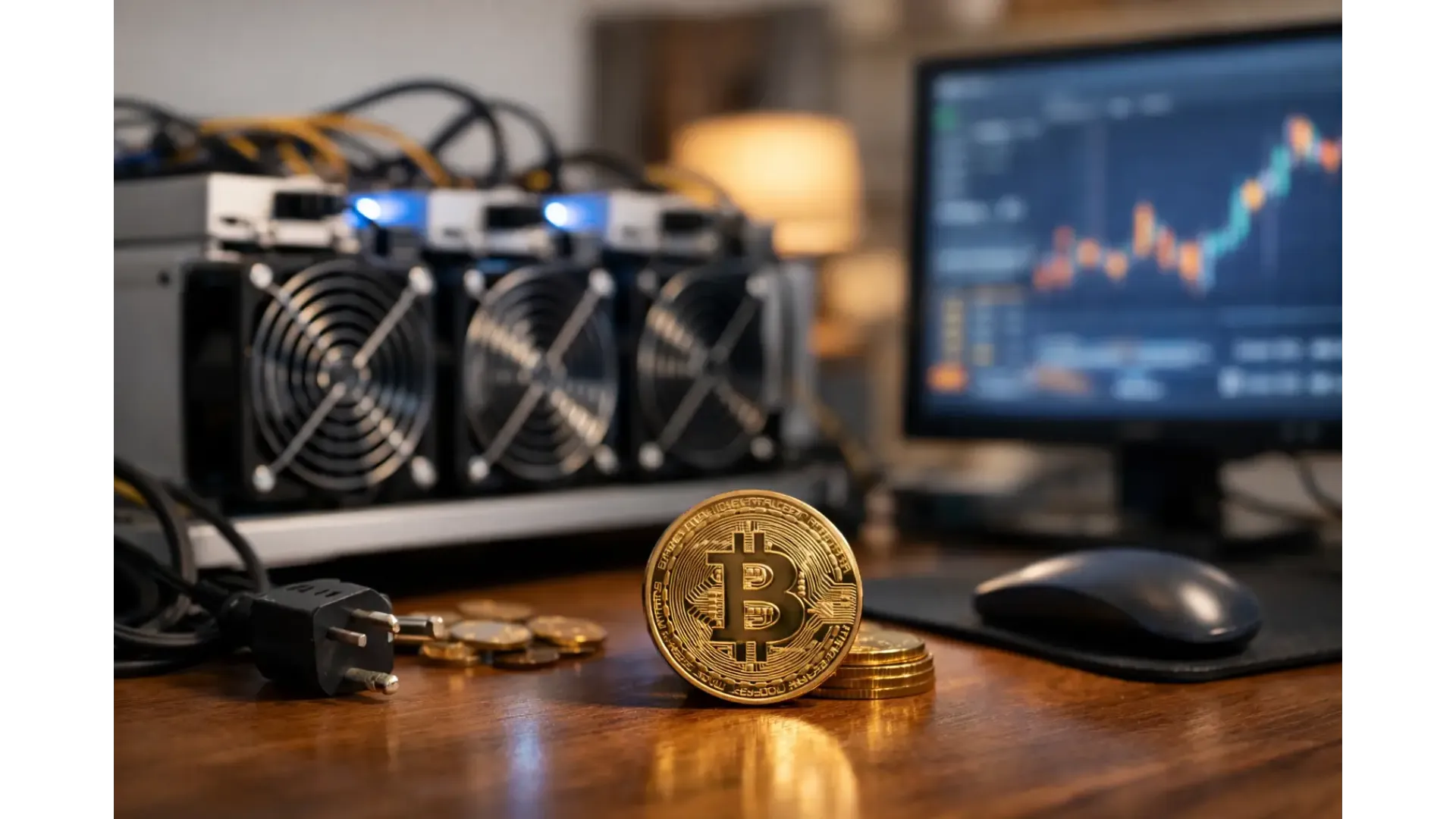
A lot of first-time buyers make the same mistake with home mining. They look at hashrate first, order the biggest machine they can afford, then realise too late that the noise, heat and power draw do not suit the room they planned to use. If you are researching how to start home bitcoin mining, the better approach is to treat it as a small hardware deployment, not a speculative gadget purchase.
Home Bitcoin mining can be straightforward, but only if you match the equipment to your property, your electricity cost and your expectations. For some people, a compact solo miner or lower-power unit is the right starting point. For others, a full ASIC setup makes sense, provided the site conditions are right.
How to start home bitcoin mining without buying the wrong hardware
The first decision is not brand, model or even budget. It is the type of mining experience you want at home. There is a practical difference between running a quiet, low-power miner in a study and installing a high-performance ASIC in a garage, workshop or outbuilding.
If your priority is learning the process, monitoring a device, connecting to a pool and understanding wallet payouts, an entry-level or home-oriented unit can be a sensible start. It keeps power use lower, reduces setup friction and gives you a clearer view of day-to-day operation. If your priority is maximum hashrate for budget, you are moving into ASIC territory quickly, and that comes with more demanding requirements around ventilation, sound and electrical planning.
The key trade-off is simple. Higher hashrate usually means higher noise, more heat and a larger power requirement. Lower-power devices are easier to live with, but the output is also lower. There is no universal best option - only the option that fits your environment.
Understand what equipment you actually need
To start mining Bitcoin at home, you need more than the miner itself. At minimum, you need a Bitcoin mining device, a reliable power setup, a stable internet connection and a wallet to receive payouts. In most cases, you will also need to decide whether you are mining to a pool or trying solo mining.
For most home users, pool mining is the more predictable route. You contribute hashrate to a pool and receive a share of rewards based on your contribution. Solo mining is different. You are effectively trying to find a block independently, which can appeal to enthusiasts, but it comes with much higher variance. It can be attractive for hobbyist users who want a different type of setup, especially with dedicated solo mining devices, but it should not be confused with steady income.
You will also need to think about practical accessories. That may include suitable cabling, network equipment, dust management and in some cases a dedicated shelf or mounting location. These are not glamorous parts of the purchase, but they affect reliability.
Choosing between a home miner and a full ASIC
A small home miner generally suits buyers who want lower noise, simpler installation and a gentler learning curve. These units are often chosen for studies, spare rooms and other lived-in spaces where a datacentre-style machine would be unrealistic.
A full ASIC miner suits buyers with a more suitable location and a clearer understanding of power and cooling demands. These machines are built for mining performance, not domestic comfort. They can make sense in a garage or separate utility area, but much less so beside a desk or in a bedroom.
Pre-owned hardware can also be worth considering if budget matters more than having the latest model. The main point is to buy with a clear view of condition, expected efficiency and support terms rather than chasing a headline bargain.
Power, heat and noise decide whether a home setup works
This is where many setups succeed or fail. Before buying, check your electricity tariff and estimate the running cost of the machine you are considering. A miner might look affordable upfront, but the operating cost is what determines whether it remains sensible after the first few weeks.
Then look at the room itself. ASIC miners produce significant heat. That heat has to go somewhere. A confined room with poor airflow becomes uncomfortable quickly and can cause the machine to run less efficiently. Good ventilation matters as much as the miner specification.
Noise is just as important. Many mining devices, especially larger ASIC units, are much louder than new buyers expect. If you share the property, work from home or have close neighbours, this is not a minor issue. Be realistic about where the machine will live.
Electrical planning for home mining
Do not treat a miner like a standard household appliance. Check the power requirements carefully and make sure the socket, circuit and power supply arrangement are suitable. If you are unsure, get qualified electrical advice before switching anything on.
This matters for both safety and uptime. An unstable or overloaded setup is bad for hardware and inconvenient for you. A miner that keeps dropping offline because the environment was not planned properly is not a good investment, even if the machine itself is well chosen.
Wallet, pool and network setup
Once the hardware side is clear, the software side is relatively straightforward. You need a Bitcoin wallet where your mining rewards will be sent. Use a wallet you control properly and make sure recovery details are stored securely.
Next, choose your mining mode. If you are joining a pool, you will enter the pool server details, worker credentials and payout information into the miner interface. If you are using a solo mining setup, the configuration will differ, and some users prefer running a dedicated node or a pre-configured pool node to reduce setup complexity.
Your internet connection does not need extreme bandwidth, but it does need to be stable. Wired Ethernet is usually preferable to Wi-Fi for a fixed mining setup. The less network interruption you have, the better.
How to start home bitcoin mining with realistic expectations
Mining calculators can be useful, but they are only estimates. Revenue depends on several moving parts, including Bitcoin price, network difficulty, machine efficiency, pool fees and your electricity cost. Anyone promising fixed returns from a home miner is oversimplifying the reality.
A more useful question is whether the setup fits your goals. If your goal is to learn Bitcoin infrastructure and run hardware yourself, home mining can be worthwhile even at a modest scale. If your goal is pure short-term profit from a single small machine in an expensive power environment, the answer may be less attractive.
This is why product matching matters. A buyer with a suitable location and competitive electricity pricing may justify a stronger ASIC. A buyer in a flat with limited ventilation and high energy costs may be better served by a smaller device or by waiting until the setup conditions improve.
Common buying errors to avoid
The first error is buying for headline hashrate and ignoring efficiency. The second is underestimating operating conditions, especially noise and heat. The third is assuming that all miners are equally suitable for home use.
Another common issue is buying from a general electronics seller that does not specialise in mining hardware. Bitcoin mining equipment is not a generic consumer category. Buyers often need support around setup expectations, compatibility, accessories and after-sales handling. A specialist retailer such as Ehasher is better positioned to help with those details because the product range is built around mining-specific use cases.
There is also a tendency to overcomplicate the first setup. You do not need a large multi-machine deployment to start. One properly chosen device in a suitable location is usually the right way to learn.
A practical starting point for most home users
If you are new to mining, start by defining the space where the machine will run. Measure the practical limits first - power availability, ventilation, tolerated noise and budget. Then choose hardware that fits those limits instead of trying to force the environment to fit the hardware.
If you want a lower-friction introduction, consider a smaller home-oriented miner or a solo miner setup designed for domestic use. If you already have a suitable utility space and understand the electrical and cooling side, a full ASIC may be appropriate. If cost control is the priority, pre-owned equipment may offer a sensible entry point, provided the condition and support terms are clear.
Good home mining is usually not about buying the most aggressive machine on paper. It is about choosing hardware you can run safely, monitor easily and keep online without turning your property into a server room. Start with a setup you can manage confidently, and the rest becomes much easier.