
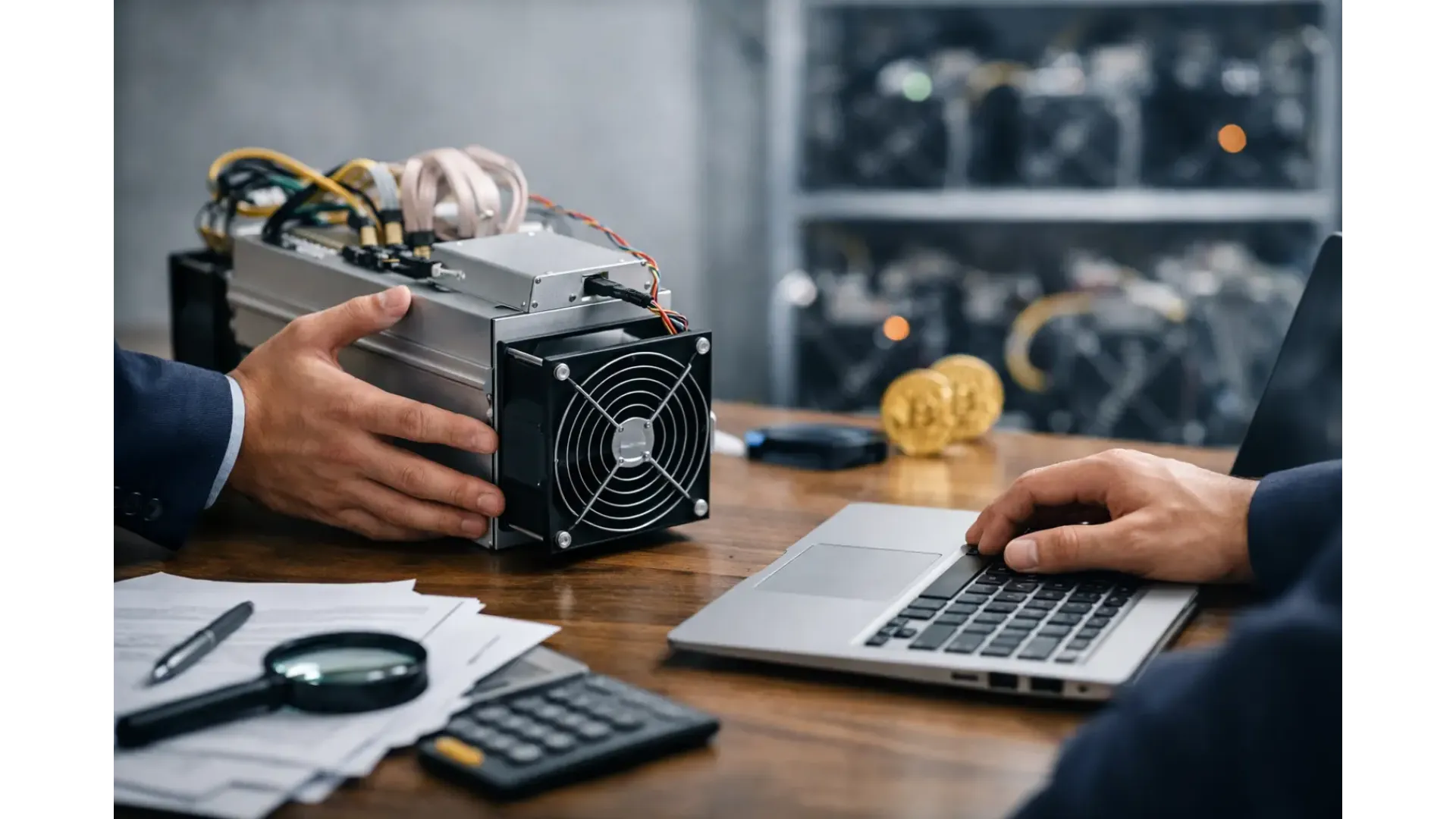
If you are working out how to buy ASIC miners, the biggest risk is rarely the checkout itself. It is buying the wrong machine for your power rate, your space, or your mining plan, then discovering the numbers do not work once it arrives. A good purchase starts before you compare prices.
ASIC miners are purpose-built machines for mining a specific algorithm. For Bitcoin, that means SHA-256 hardware rather than a general PC or graphics card setup. They are efficient, specialised, and far less forgiving if you buy on assumptions. That is why the buying process should focus on fit, not just on headline hashrate.
How to buy ASIC miners based on your actual use case
The right unit for a home miner is not always the right unit for a small commercial setup. Before looking at stock, decide what kind of operation you are building. If you want quiet, low-power home mining, your options will differ sharply from someone planning to run multiple full-size ASICs in a dedicated space.
Start with four practical questions. What coin or algorithm are you mining? What is your electricity price per kWh? Where will the miner run? And are you buying for immediate operation, long-term accumulation, or experimentation? These answers narrow the field quickly.
If you are mining Bitcoin at home, power draw and noise usually matter more than raw output alone. A high-performance unit may look attractive on paper but become impractical if it trips circuits, overheats a room, or creates constant fan noise. If you are buying for a garage, outbuilding, or ventilated workshop, you may have more flexibility.
Match the miner to the algorithm
This sounds obvious, but it is a common point of confusion for first-time buyers. ASIC miners are not general-purpose machines. A Bitcoin ASIC built for SHA-256 cannot simply be repurposed to mine another algorithm outside its design. Buying the wrong hardware family means you are locked into the wrong task from day one.
That also means you should be cautious with listings that lean on broad crypto language without clearly stating the algorithm, supported coin, model, and expected performance. A specialist retailer should make that information easy to verify.
Decide whether new or pre-owned makes more sense
New machines usually offer the cleanest path if you want current-generation efficiency, manufacturer-backed hardware, and fewer unknowns. Pre-owned units can make sense if your priority is lower upfront cost or if you are comfortable with a shorter payback target and some performance risk.
Neither option is automatically better. A pre-owned miner from a seller that checks condition, states usage clearly, and provides sensible warranty terms may be a better buy than a heavily marked-up new machine from a vague source. The trade-off is simple: lower purchase price versus more certainty.
What to check before you buy
Once you know the type of ASIC you need, compare machines on total operating reality rather than headline marketing. Hashrate matters, but it is only one part of the purchase decision.
Power consumption deserves equal attention. Two miners with similar hashrate can produce very different electricity costs, and over time that difference matters more than many buyers expect. Look at efficiency in watts per terahash, not just maximum output. A cheaper unit can become more expensive to run surprisingly quickly.
Noise is another point buyers underestimate. Many full ASIC miners are loud enough to be unsuitable for normal indoor use. If your setup is in a home environment, check fan design, stated decibel level if available, and cooling requirements. It is better to reject a machine before purchase than to try solving a noise problem after installation.
Heat output follows the same logic. ASICs convert significant power into heat, so your room size, airflow, extraction, and ambient temperature all affect usability. If the machine will live in a spare room, utility area, or loft, be realistic. Stable operation depends on more than finding a plug socket.
PSU, voltage and plug requirements
Not every miner arrives ready for a standard domestic setup. Some include a power supply unit, some do not. Some require higher voltage input or specific connectors. Confirm exactly what is included and what power standard the machine expects before ordering.
For UK buyers, this matters at checkout, not after dispatch. A machine that needs additional power hardware, adapter changes, or electrical work is not necessarily a bad purchase, but it changes the true cost and lead time.
Warranty and returns are part of the product
Mining hardware is not a casual purchase. Warranty length, dead-on-arrival procedures, and returns terms are part of the buying decision because they affect your downside if a machine arrives faulty or develops an issue early.
A reliable seller should state what is covered, for how long, and how support works. That does not remove all risk, but it gives you a practical route if something goes wrong. Direct support also matters. If you have a configuration question or need help confirming compatibility, responsive pre-sale support is often a good sign of post-sale support too.
How to assess price properly
Buyers often compare ASIC miners using the product price alone. That is too narrow. The real buying cost includes the machine, shipping, import position if relevant, PSU or accessories if not included, and expected electricity use.
Then there is time. If one seller has a lower headline price but uncertain stock, weak dispatch information, or poor communication, that discount may not be worth much. Mining hardware markets move quickly. Delayed availability can change the economics of the purchase.
This is why specialist retailers often make more sense than broad marketplaces or anonymous overseas listings. You are not just paying for a box. You are paying for accurate product information, a realistic delivery process, and support from people who actually sell mining hardware every day.
Be cautious with unrealistic ROI claims
If a listing or seller overemphasises fast returns without discussing electricity, difficulty changes, or operating conditions, treat that as a warning sign. Mining revenue is variable. Network difficulty, coin price, pool fees, uptime, and power cost all affect results.
A sensible buying process uses current profitability as a reference point, not a guarantee. If the numbers only work under perfect conditions, they probably do not work well enough.
Where buyers often go wrong
Most costly mistakes come from buying too fast. One common error is choosing by hashrate alone and ignoring efficiency. Another is buying a full-size ASIC for a home environment without planning for noise and heat. A third is assuming every seller defines condition, warranty, and included parts in the same way.
There is also a tendency to overbuy on the first order. For many home and hobbyist miners, starting with a machine that suits the space and power setup is smarter than stretching for maximum output. Expansion is easier when the first unit is manageable.
If you are new to mining, simpler is usually better. A machine with clear specs, straightforward setup expectations, and available support will often deliver a better ownership experience than a more powerful unit that creates installation problems.
How to buy ASIC miners from a reliable retailer
The seller matters almost as much as the hardware. Look for clear product categorisation, stated stock or dispatch expectations, warranty information, returns policy, and accessible support. Those are not cosmetic details. They reduce friction and help you make a decision based on facts rather than guesswork.
A mining-specific retailer should also understand adjacent needs such as home mining limitations, solo mining hardware, pre-owned options, and supporting accessories. That category depth makes it easier to buy the right machine instead of the most aggressively advertised one. For buyers who want a more direct route, Ehasher focuses specifically on mining hardware rather than general electronics, which tends to make comparison and support more straightforward.
Before placing an order, verify the exact model, condition, included PSU status, estimated delivery window, warranty terms, and any setup assumptions. If any of that is unclear, ask before you buy. Good sellers expect those questions.
A practical buying approach that usually works
Begin with your constraints, not the catalogue. Set your electricity rate, available space, noise tolerance, and budget. Shortlist only machines that fit those limits. Then compare efficiency, condition, seller support, and total delivered cost.
That process may feel less exciting than chasing the highest hashrate on the page, but it is how buyers avoid expensive mismatches. The best ASIC miner to buy is the one you can power properly, cool properly, and run with confidence from day one.
A good miner on the right site beats a great miner in the wrong environment every time.