
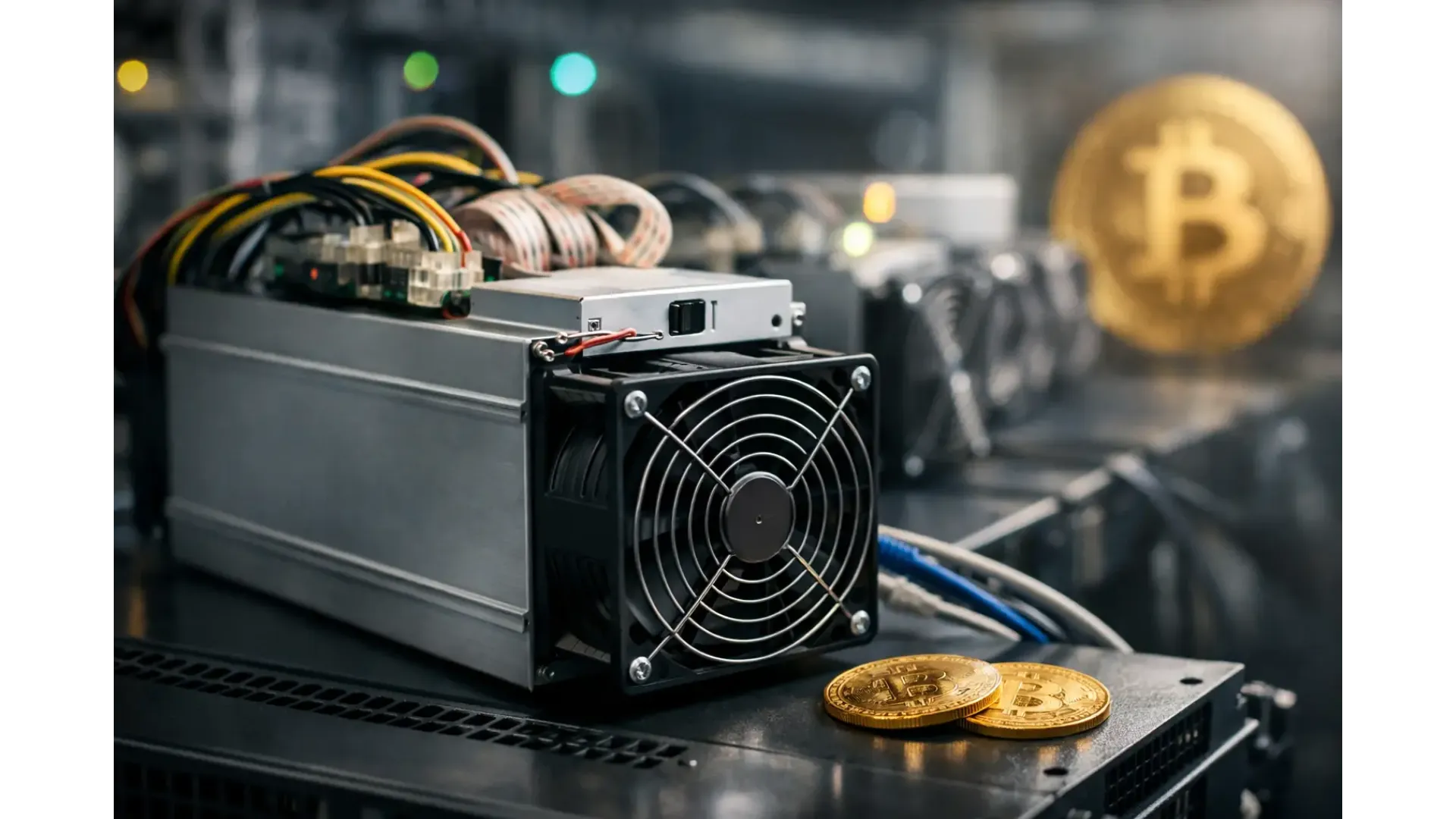
A miner’s headline hashrate only tells part of the story. If you are comparing machines for a home setup, a small mining room, or a first Bitcoin purchase, understanding how ASIC miners work makes it much easier to judge what you are actually buying.
An ASIC miner is a purpose-built computer designed to do one job extremely well: calculate hashes for a specific mining algorithm. In Bitcoin mining, that algorithm is SHA-256. Unlike a general PC or even a graphics card, an ASIC cannot switch comfortably between lots of unrelated tasks. It is engineered to perform repeated hashing operations at very high speed, with hardware designed around efficiency, thermal control and continuous operation.
What an ASIC miner is actually doing
To understand how ASIC miners work, start with the basic task. Bitcoin miners compete to find a valid block hash that meets the network’s current difficulty target. A block contains transaction data, a reference to the previous block, and other metadata. The miner repeatedly changes a value called the nonce and runs the block header through the SHA-256 function twice.
Each result is a long string of numbers and letters. Most of those results are useless for the current target. The miner keeps trying new combinations until it finds one low enough to qualify as valid. This is why mining is often described as a lottery, but it is a lottery based on raw computation. The more hashes a miner can perform per second, the more chances it has.
That is the reason ASIC hardware exists. Bitcoin mining became too competitive for CPUs first, then GPUs, and then most FPGA setups. Purpose-built silicon won because it could process SHA-256 faster and with better efficiency per watt.
The main parts inside an ASIC miner
Although models vary, most ASIC miners follow the same hardware layout. The core components are the hash boards, control board, power supply and cooling system.
Hash boards and ASIC chips
The hash boards carry the ASIC chips that do the actual mining work. Each chip is designed to execute SHA-256 calculations as efficiently as possible. A miner may contain dozens or even hundreds of chips spread across multiple boards, all working in parallel.
This parallel design is the key to high hashrate. One chip performs a vast number of calculations, but many chips working together produce the terahashes per second quoted in product specifications.
Control board
The control board runs the miner’s operating system and manages communication between the hardware and your network connection. It sends work to the hash boards, monitors temperatures, fan speeds and chip status, and communicates with the mining pool.
This part matters more than many first-time buyers expect. Stable firmware and sensible monitoring tools make a real difference to uptime and fault diagnosis.
Power supply unit
ASIC miners use substantial power, so the power supply unit has to deliver stable current under constant load. In practical terms, this is where efficiency becomes commercial rather than theoretical. Two miners with similar hashrate can produce very different running costs depending on their wattage and efficiency.
For home users in particular, electricity pricing often matters as much as the purchase price.
Cooling system
ASIC chips generate significant heat. Most units rely on high-speed fans pushing air through the machine, though some setups use immersion or hydro cooling. Air-cooled miners are simpler and more common, but they are also noisy. That trade-off is straightforward: easier deployment, but much more sound and more sensitivity to room temperature and airflow.
How ASIC miners work with a mining pool
A standalone ASIC miner can technically mine on its own, but for most operators that would mean waiting a very long time for highly uncertain rewards. That is why most machines are connected to a mining pool.
The pool distributes simplified work packages to connected miners. Your ASIC performs hashing against that work, and when it finds qualifying shares, those are submitted back to the pool as proof that your machine contributed computational effort. If the pool finds a valid block, the reward is distributed according to the pool’s payout model and your share of contributed work.
This is an important distinction. Most of the time, your machine is not finding full Bitcoin blocks by itself. It is submitting shares that represent measurable mining output. For buyers comparing equipment, this means consistency and uptime matter just as much as peak specification.
Why ASICs outperform other hardware
The short answer is specialisation. An ASIC strips away the overhead that makes a CPU or GPU flexible. It does not need to render graphics, run office software or manage broad computing tasks. Its silicon is arranged specifically for one repetitive mathematical workload.
That brings clear benefits in Bitcoin mining, but there is a trade-off. ASICs are not general-purpose assets. A SHA-256 miner is valuable because it mines compatible coins efficiently. If market conditions shift, its usefulness is tied to that algorithm and the economics around it.
For a buyer, this is why choosing the right machine means looking beyond headline hashrate. Efficiency, reliability, firmware quality, noise profile and power requirements all affect whether a unit fits your intended environment.
How performance is measured
When reading product pages, three figures matter most: hashrate, power consumption and energy efficiency.
Hashrate tells you how many hashes the machine performs per second, usually shown in TH/s for Bitcoin ASICs. Power consumption is measured in watts. Efficiency is typically expressed as joules per terahash, or J/TH. Lower J/TH is better because it means less energy is used for the same amount of work.
A miner with a very high hashrate can still be a poor fit if it pulls too much power for your site, your electrical circuit or your operating budget. Likewise, a smaller unit may make more sense in a domestic environment where heat, noise and available power are limiting factors.
How ASIC miners work in real operating conditions
Published specifications assume controlled conditions. Real-world performance depends on temperature, dust, airflow, power quality and firmware settings.
If ambient temperature rises, chips may throttle to protect themselves. If airflow is poor, the miner may run hotter, louder and less efficiently. If dust builds up, cooling performance drops and maintenance becomes more important. None of this is unusual, but it does mean deployment planning is part of the buying decision.
This is where newer operators often underestimate the practical side of mining. The machine is only one part of the setup. You also need suitable power delivery, network stability, ventilation and a realistic plan for heat and sound.
Common misconceptions about ASIC mining
One common misconception is that mining is just “plug it in and print Bitcoin”. In practice, profitability depends on electricity cost, network difficulty, pool fees, hardware efficiency and uptime. The machine may function perfectly and still perform differently from expectations if one of those factors shifts.
Another misconception is that all ASIC miners are suitable for home use. Some are, but many are not ideal unless you have a dedicated outbuilding, garage, plant room or a sound-managed environment. Fan noise on larger units is substantial and should be treated as a serious installation factor, not a minor inconvenience.
It is also a mistake to assume older miners are always poor value. Sometimes pre-owned or lower-output equipment suits a buyer better, especially if the goal is learning, testing, low-scale home mining or managing a tighter upfront budget. It depends on your electricity cost and what you want from the setup.
What buyers should check before choosing a miner
Before purchasing, focus on fit rather than hype. Check the algorithm first, then verify the hashrate, wattage, input voltage, connector requirements, physical size and noise level. Consider where the machine will run and whether that space can handle the heat and sound.
Support matters too. Mining hardware is specialist equipment, and buyers benefit from clear warranty terms, realistic delivery information and access to direct technical guidance when setup questions appear. That is one reason specialist retailers such as Ehasher appeal to miners who would rather buy from a business that understands the hardware than from a general electronics seller.
If you are comparing beginner-friendly options against larger enthusiast machines, be honest about your constraints. A smaller unit that runs reliably within your available power and ventilation may be a better purchase than a faster machine you cannot operate properly.
The practical point of understanding how ASIC miners work
Once you know how ASIC miners work, product specifications become easier to interpret. You are no longer just looking at a TH/s figure. You are judging a purpose-built machine that converts electricity into SHA-256 calculations, sends shares to a pool, and needs the right environment to keep doing that efficiently.
That understanding usually leads to better buying decisions. It helps you match the miner to your power cost, your space, your noise tolerance and your operating goals. For most people, that is far more useful than chasing the biggest headline number on the page.
A good miner is not simply the fastest one available. It is the one you can power, cool and run consistently with confidence.
Related Product
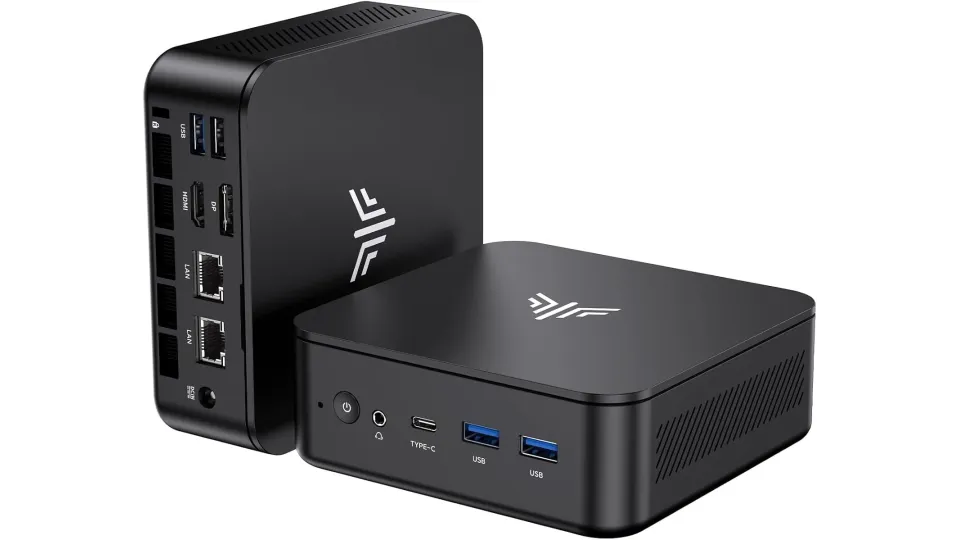
NIPOGI E3 Mini PC Ryzen 5 3500U Black | 32GB RAM | 1TB NVMe | 5tratumOS Node Ready
This compact and energy-efficient NiPoGi E3 Mini PC has been professionally configured as a multi-chain pool node system, running 5tratumOS on a high-..
£449.95
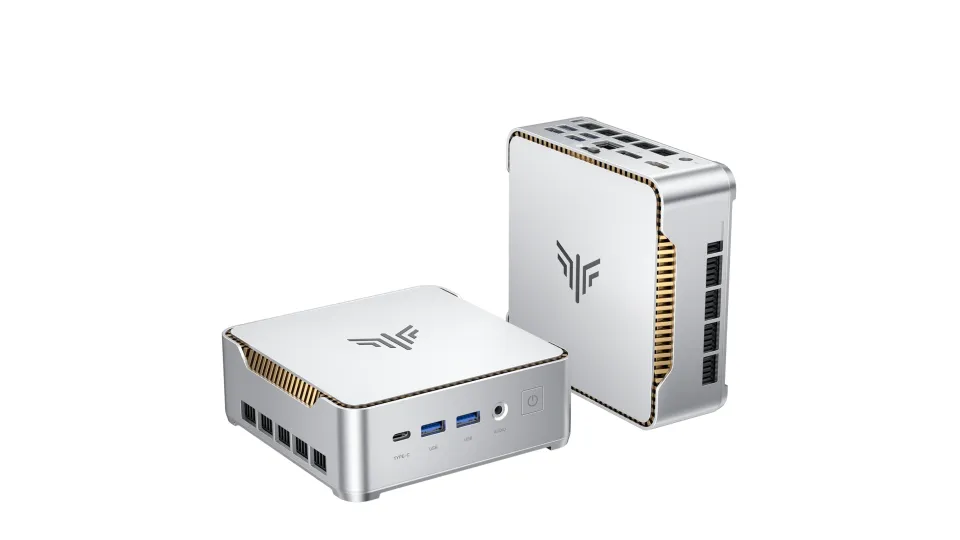
NiPoGi P2 Mini PC – Ryzen 4300U White | 32 RAM | 1TB NVMe | Pre-Installed with 5tratumOS
This compact and energy-efficient NiPoGi P2 Mini PC has been professionally configured as a multi-chain pool node system, running 5tratumOS on a high-..
£449.95
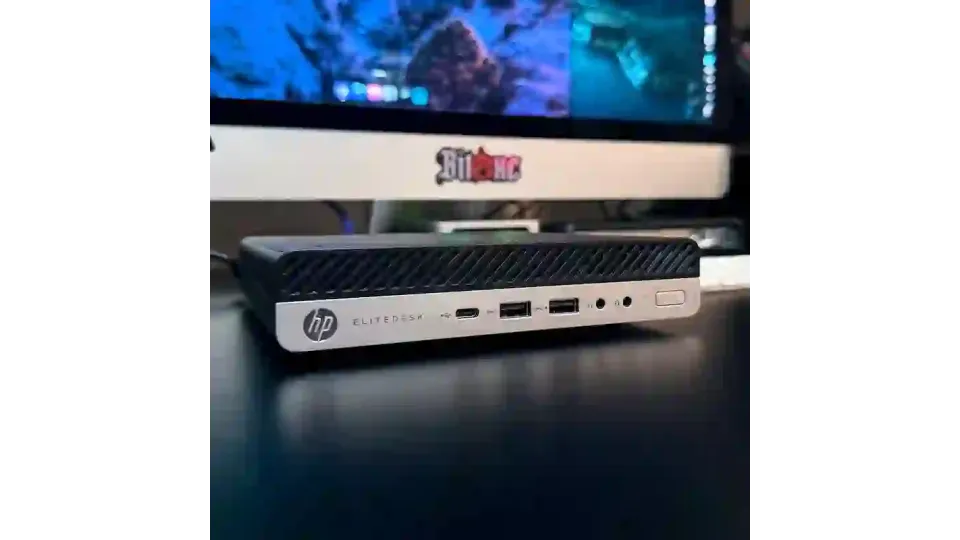
HP EliteDesk 800 G3 Mini PC – i5-7500T 16GB 1TB NVMe – 5tratumOS Multi-Chain Node
HP EliteDesk 800 G3 Mini PC – 5tratumOS Multi-Chain Node (1TB NVMe) Condition: Used – fully tested and prepared. May show minor cosmetic wear. ..
£329.95
HP EliteDesk 705 G4 Mini PC – 16GB 512GB NVMe – 5tratumOS Starter Node
HP EliteDesk 705 G4 Mini PC – 5tratumOS Multi-Chain Node (1TB NVMe) Condition: Used – fully tested and prepared. May show minor cosmetic wear. ..
£219.95