
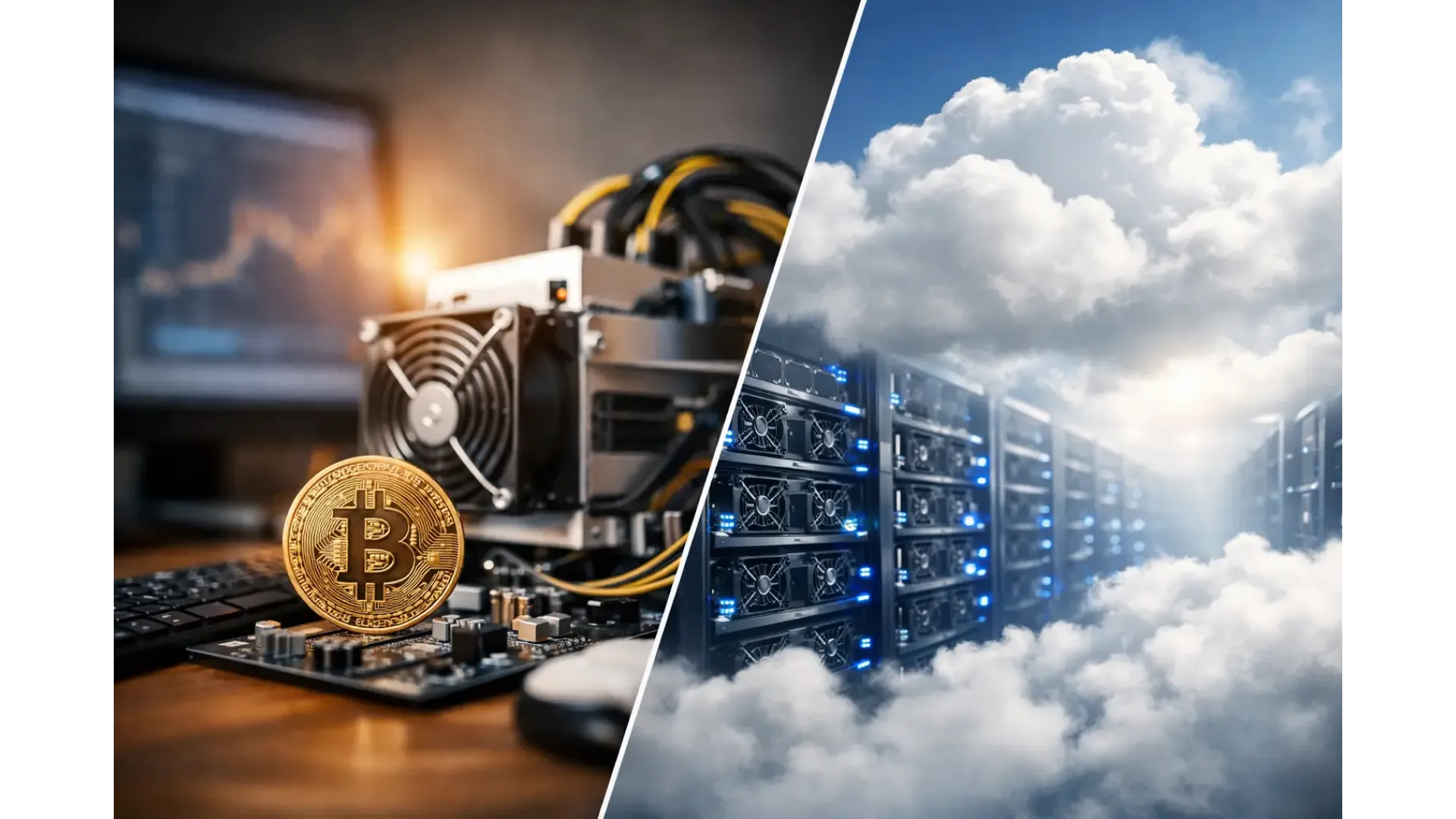
If you are weighing up a home bitcoin miner vs cloud mining decision, the real question is not simply which one is cheaper. It is which model gives you acceptable risk, workable operating costs, and enough control over the outcome to justify the spend. For most buyers, that means looking past marketing claims and focusing on hardware ownership, electricity pricing, contract terms, and how much involvement you actually want.
Bitcoin mining can look straightforward from the outside. You either buy a machine and run it at home, or you pay a provider to mine on your behalf. In practice, the difference between those two routes is substantial. One gives you direct possession of equipment and a predictable operating structure. The other removes setup friction, but often adds counterparty risk and limits transparency.
Home bitcoin miner vs cloud mining: the core difference
A home Bitcoin miner is a physical machine you own, install, power and maintain yourself. In most cases this means an ASIC miner or a lower-power home mining device, depending on your budget, space and power constraints. You control where it runs, how it is configured, which pool it connects to, and whether you keep operating, upgrade, resell or switch strategy later.
Cloud mining is different. You do not receive the miner. Instead, you purchase a contract, hashpower allocation or hosted mining package from a third party. That provider runs the equipment, handles the site infrastructure and usually pays out according to contract terms. Your exposure is to the provider’s pricing model, uptime reporting and honesty.
That distinction matters because mining economics are rarely static. Network difficulty changes. Bitcoin price moves. Electricity rates vary. Hardware values rise and fall. When you own the machine, you keep optionality. When you buy cloud mining, you are usually locking into terms designed first to protect the operator.
Where a home miner makes more sense
A home setup is usually the better fit for buyers who want control and understand that mining is an operational activity, not a passive yield product. Even a small home mining system gives you direct visibility over the hardware, fan behaviour, power draw and uptime. That makes troubleshooting easier and removes a layer of trust.
Ownership also has value beyond daily output. A machine is an asset you can keep running, repurpose in a different setup, or sell on the secondary market. If profitability tightens, you still hold equipment with residual value. A cloud contract generally has no resale value once purchased.
For technically capable buyers, this is often the deciding factor. A miner at home may involve more planning around ventilation, heat and noise, but those are known and manageable constraints. Cloud mining can appear simpler, yet the simplicity comes from giving up control.
There is also the question of transparency. With home mining, you can measure what the machine is doing. Hashrate, power usage, rejects, pool connectivity and temperatures are visible. With cloud mining, you are dependent on dashboard data from the same party selling the contract. That does not automatically make every provider unreliable, but it does mean verification is weaker.
The practical limits of mining at home
Home mining is not frictionless, and it should not be presented that way. The biggest issue for most domestic buyers is power cost. UK electricity prices are high by global mining standards, which means profitability can be tight unless you have an efficient unit, favourable tariff structure, a specific mining objective, or a longer-term view on accumulating Bitcoin.
Noise is another serious consideration. Full-size ASIC miners are industrial machines. In a garage, outbuilding or dedicated utility area, they may be workable. In a spare room or shared living space, they are rarely acceptable without noise reduction measures. Heat output is similarly significant. That heat can be useful in some contexts, but it still has to be managed safely.
Then there is setup discipline. You need suitable power, sensible airflow, secure networking and realistic expectations about maintenance. Fans fail. Dust builds up. Firmware settings need checking. None of this is unusually difficult for a capable buyer, but it is still part of the job.
That is why entry-level and home-focused mining products matter. Not every customer needs a large ASIC on day one. Lower-power devices, quieter units and compact solo miners can make far more sense for learning, experimenting or running a small home-based operation without the full overhead of a commercial machine.
Where cloud mining can appeal
Cloud mining attracts buyers for obvious reasons. There is no hardware to install, no noise to manage, and no domestic electricity bill linked directly to the machine. If someone wants exposure to mining without housing equipment, cloud offers a cleaner starting point on paper.
It can also appeal to people in locations with poor ventilation options, strict tenancy limitations, or no appetite for equipment handling. If your property rules out mining hardware entirely, a hosted or cloud arrangement may look like the only practical route.
But convenience should not be confused with lower risk. In many cases, cloud mining shifts operational burden from the customer to the provider while adding contractual and trust risk. The question becomes whether that trade-off is worth it.
Why cloud mining often disappoints
The main problem with cloud mining is that incentives are not always aligned. Providers need to make margin, cover their infrastructure costs, and protect themselves from volatility. That often leads to contracts with management fees, variable payout formulas, difficult termination clauses or optimistic profit illustrations that assume favourable market conditions.
Even when the provider is legitimate, the customer may still end up with weak economics. If network difficulty rises or Bitcoin price falls, returns can shrink quickly. Some contracts become marginal long before the contract term ends. In the worst cases, buyers discover they have paid upfront for projected output that never realistically had room to outperform simply buying Bitcoin directly.
Fraud is also a genuine issue in this segment. Because customers do not receive equipment, low-quality operators can rely on polished dashboards and aggressive marketing. If you cannot inspect the machine, verify the site, or understand exactly how payouts are calculated, your downside expands.
That is why experienced miners often treat cloud offers with caution. The less visible the underlying operation, the more important the provider’s credibility becomes.
Cost, control and risk
If you strip away the packaging, home bitcoin miner vs cloud mining comes down to three things: cost structure, control, and risk exposure.
With home mining, upfront cost is higher because you are buying hardware. Ongoing cost is also visible because electricity is your responsibility. But the structure is transparent. You know what machine you own, what it consumes, and what it is producing.
With cloud mining, the upfront payment may appear simpler, yet the true cost can be harder to assess. Fees may be embedded. Performance assumptions may be optimistic. Payouts may depend on terms you cannot influence. You also cannot improve deployment conditions, switch hardware configuration, or recover value by selling the unit.
For many buyers, that means home mining is better for control, while cloud mining is better only for reducing hands-on involvement. Whether that convenience premium is justified depends on your confidence in the provider and your willingness to accept less visibility.
Which option suits which buyer?
If you want to learn mining properly, understand your own setup, and keep flexibility over time, a home miner is usually the stronger option. This is especially true if you are comfortable with basic networking, power planning and routine maintenance. You are running equipment, not buying a promise.
If you cannot host hardware at all and still want mining exposure, cloud may be the only practical route. Even then, it makes sense to proceed carefully, read terms closely, and compare the likely outcome against simply purchasing Bitcoin outright. Convenience has a cost, and in cloud mining that cost is not always obvious at the point of sale.
For buyers considering hardware, the sensible route is to match the machine to the environment rather than chase headline hashrate alone. Noise level, power draw, room conditions and budget matter just as much as theoretical output. A specialist retailer such as Ehasher is useful in that context because the buying decision is usually about fit, not just specifications.
There is no universal winner here. A home miner gives you work, responsibility and control. Cloud mining removes the hardware burden but asks for trust and often locks you into someone else’s economics. If you want fewer unknowns, owning the machine is usually the cleaner place to start.
Related Product
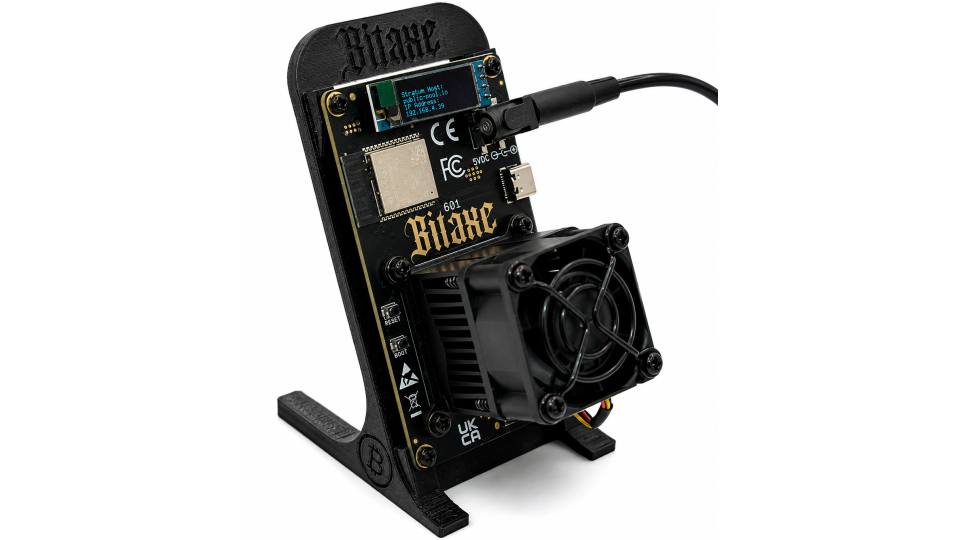
Bitaxe Gamma 601 Solo Bitcoin Miner – 1.07 to 1.2TH/s 18W BM1370
The Bitaxe Gamma 601 is one of the most powerful open-source single-ASIC Bitcoin miners currently available. Designed for desktop use, the Gamma repre..
£59.95