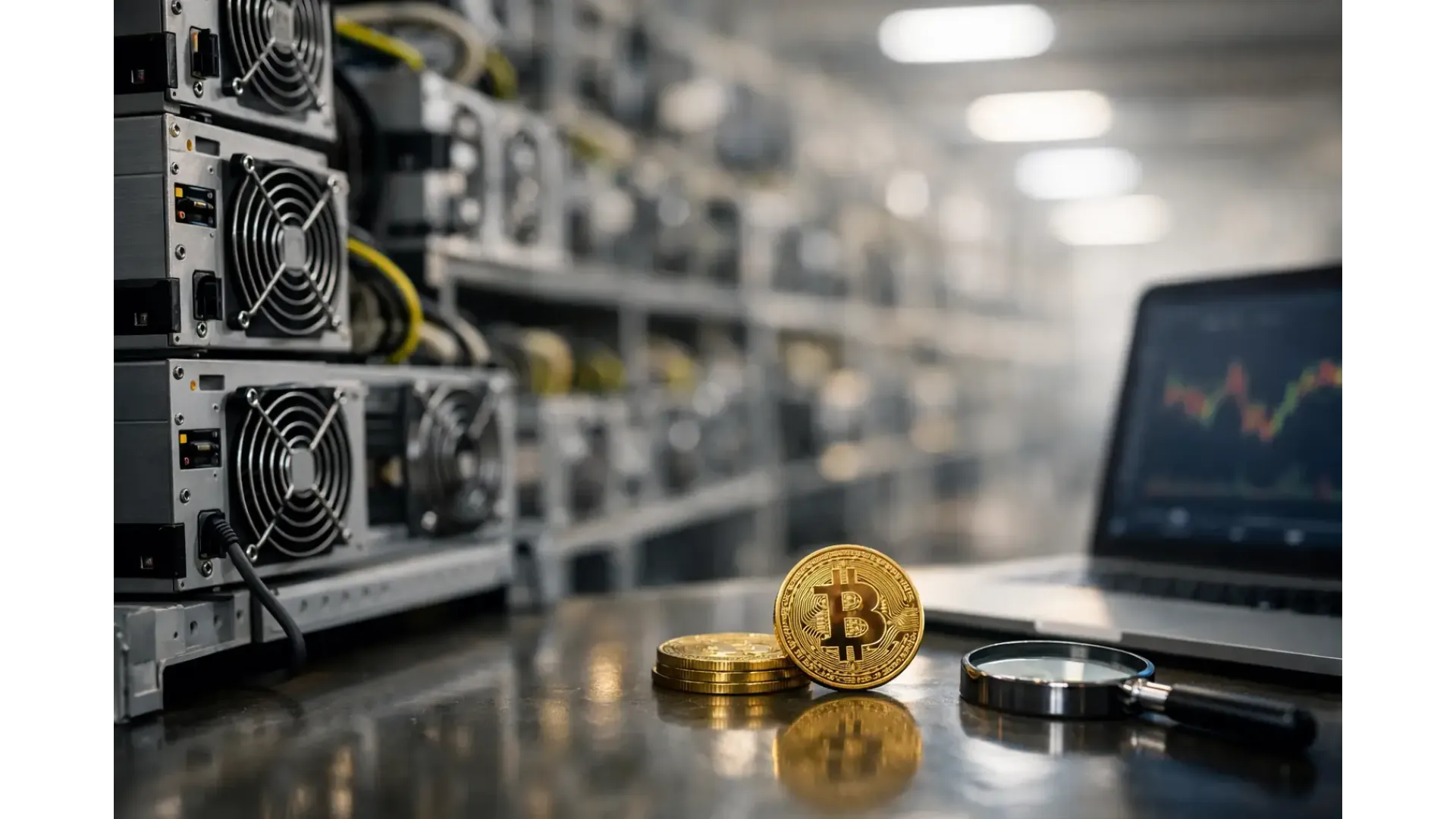
If you are planning hardware purchases for the next cycle, bitcoin miner trends 2026 are less about hype and more about practical maths. Buyers are looking harder at watts per terahash, noise output, cooling requirements, delivery reliability, and whether a machine actually fits the site where it will run. That shift matters for home miners, small operators, and anyone trying to avoid expensive mistakes.
The market is moving towards more deliberate buying. A few years ago, many customers focused almost entirely on headline hashrate. In 2026, that approach looks incomplete. Energy pricing, room conditions, firmware support, repairability, and power distribution are all shaping purchasing decisions just as much as raw performance.
## Bitcoin miner trends 2026 are becoming more site-specific
One of the clearest changes is that miner selection is being matched more closely to the installation environment. That sounds obvious, but in practice many buyers still start with the machine and only later consider the room, circuit capacity, extraction, and ambient temperature.
That order is changing. A home user in the UK with limited space and standard domestic power has very different requirements from a garage-based miner with extraction already installed. The same applies to small commercial users running several units on dedicated circuits. In 2026, the better buying decisions start with the site first and the miner second.
This is also why lower-power and [home-oriented mining products](https://ehasher.com/en-gb/all-blog-page/home-bitcoin-miners) continue to attract attention. Not every customer wants a large industrial ASIC that demands aggressive ventilation and sustained high current draw. Some want exposure to mining in a format that is manageable, quieter, and easier to deploy.
## Efficiency matters more than headline hashrate
ASIC development has not stopped, but the buying conversation is becoming stricter. A miner with impressive hashrate may still be a poor fit if efficiency is weak or if the unit is only economical under unusually cheap electricity.
For many buyers, the key comparison now starts with power consumption per unit of output. When margins tighten, efficiency gives more room to operate across changing network difficulty and variable electricity costs. It also affects secondary costs - heat, airflow, cabling, and PSU demands all scale with power draw.
There is a trade-off, though. The newest and most efficient models usually command a price premium. That means the best machine on paper is not always the best purchase. A well-priced previous-generation unit can still make sense if the entry cost is low enough and the operating environment is already suitable. Buyers in 2026 are increasingly comparing total deployment cost rather than chasing the latest release by default.
### Pre-owned hardware is staying relevant
This is one reason pre-owned ASICs remain part of the market rather than a temporary stopgap. For budget-conscious miners, pre-owned units can offer a lower barrier to entry and a faster route to deployed hashrate.
The caveat is straightforward. Condition, prior operating history, fan wear, hashboard health, and warranty coverage matter far more on used equipment. A cheaper machine becomes expensive quickly if it arrives with faults or unsupported issues. Specialist retailers with clear testing, returns, and product detail are likely to keep an advantage here because buyers want less uncertainty, not more.
## Home mining is becoming a separate buying category
Another of the defining bitcoin miner trends 2026 is the continued split between industrial-style ASIC buying and genuine home mining demand. These are no longer the same category with different budgets. They are increasingly different use cases.
Home miners are not only asking whether a device can mine. They are asking whether it can live in a house, outbuilding, or workshop without becoming a constant nuisance. Noise, heat output, plug type, setup complexity, and monitoring all matter. In many cases, a lower-output machine with simpler deployment is the better answer.
This also helps explain interest in [solo mining devices](https://ehasher.com/en-gb/catalog/solo-bitcoin-miners) and compact systems. For some buyers, the goal is not to build a large-scale operation but to run dedicated hardware in a manageable way, learn the stack properly, or participate in mining without industrial infrastructure. That demand is practical and persistent, especially among technically capable hobbyists who want purpose-built equipment instead of adapting general computing gear.
### Noise and thermal management are now buying factors, not afterthoughts
Cooling remains one of the main reasons mining plans fail at home. A spec sheet might show attractive output, but it does not tell you what the room feels like after several hours of operation. It also does not tell you whether the sound profile is tolerable.
By 2026, buyers are treating acoustic and thermal realities as front-end criteria. That means more interest in quieter platforms, better fan control, enclosed setups, and products suited to lower-impact environments. It also means more realistic expectations. A serious ASIC still produces serious heat. Good product selection can reduce friction, but it cannot remove the laws of thermodynamics.
## Infrastructure products are becoming more important
Mining is no longer just about the miner itself. Buyers are placing more value on the surrounding infrastructure - pool connectivity, node access, monitoring, network stability, and pre-configured support hardware.
This is particularly relevant for customers who want a cleaner setup path. Pre-installed mining pool nodes and related support equipment reduce time spent on configuration and lower the chance of avoidable setup errors. That is useful for newcomers, but it also appeals to experienced buyers who would rather deploy quickly than build every element from scratch.
There is a wider trend underneath this. Customers are increasingly buying systems, not isolated boxes. They want the miner, the correct accessories, the right power assumptions, and a support route if something goes wrong. Retailers that understand the full hardware stack are better placed than general electronics sellers because mining purchases are rarely one-product decisions.
## Stock access, support, and after-sales trust are shaping where buyers purchase
In 2026, product sourcing still matters almost as much as product selection. Many miners have had poor experiences with unclear lead times, vague warranty terms, import complications, or support that disappears after dispatch.
As a result, trust signals are becoming commercially significant. Buyers want clear delivery expectations, realistic product information, return terms they can actually read, and direct support channels that lead to a useful answer. This is especially true for first-time ASIC buyers, but experienced users care just as much once they have dealt with delayed shipments or unsupported faults.
A specialist retailer such as Ehasher fits this shift because the value is not only in listing mining hardware. It is in reducing uncertainty around what the hardware is, how it fits a use case, and what support exists after purchase.
## Small-scale miners are becoming more selective, not disappearing
There is a recurring claim that small miners are being priced out entirely. That is too simplistic. What is happening is more selective participation.
Small-scale operators are becoming less willing to buy hardware that only works under near-perfect assumptions. They are screening for electricity cost, noise tolerance, heat reuse potential, available circuits, and realistic payback windows. Some will still choose high-performance ASICs. Others will deliberately choose lower-power devices, solo products, or pre-owned units because those options align better with their budget and location.
This is a healthier trend than speculative buying. It means more customers are entering mining with a clearer understanding of trade-offs. It may reduce impulse purchases, but it improves long-term satisfaction and lowers the likelihood of equipment sitting idle after a few weeks.
## What buyers should watch before ordering in 2026
The practical question is not simply which miner is popular. It is whether the machine suits your operating conditions and buying goals.
Start with electricity pricing and available power. Then look at space, airflow, and noise tolerance. After that, compare machines on efficiency, not just hashrate. If budget is tight, include pre-owned options in the [comparison](https://ehasher.com/en-gb/information/mining-profitability-calculator), but only where condition and support are properly defined. If setup simplicity matters, factor in pre-configured accessories or node products rather than treating them as optional extras.
The strongest buyers in 2026 are not the ones chasing every launch announcement. They are the ones matching hardware to reality. That usually leads to fewer surprises, faster deployment, and better value across the life of the machine.
Mining hardware will keep changing, but the direction is already clear. Better decisions are coming from buyers who treat power, heat, support, and deployment as part of the product, not as problems to solve later. If you approach 2026 with that mindset, you are far more likely to buy hardware that actually works for the way you mine.