
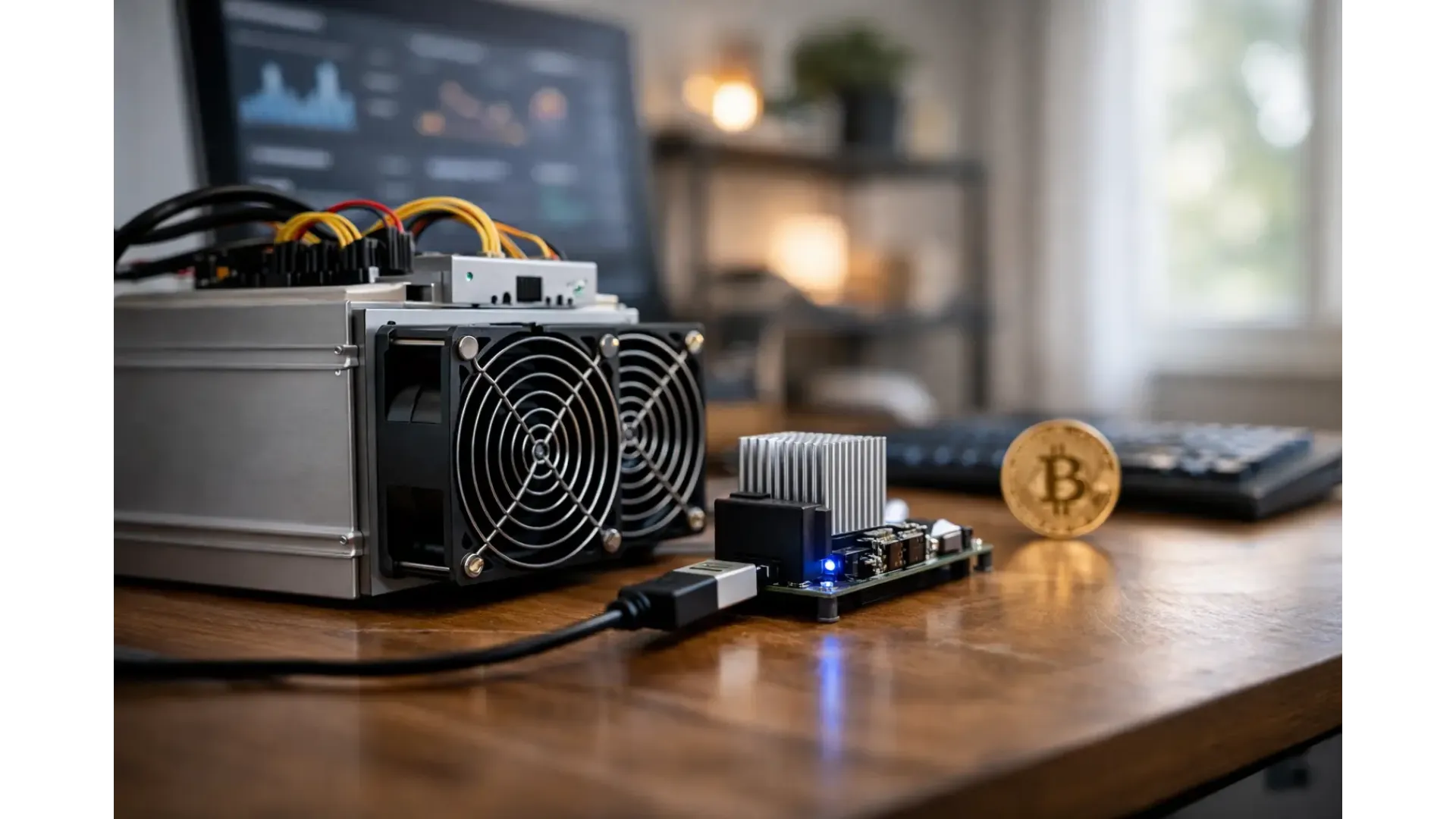
A small desktop miner finding a Bitcoin block is unlikely. That is the point many buyers miss when comparing the best solo mining devices. Solo mining is not a predictable income strategy at home scale. It is a direct attempt to find a valid block using your own hashrate, where the full block reward goes to the successful miner rather than being shared through a pool.
The right device depends on what you want from the setup. A compact lottery miner can be an affordable way to learn how Bitcoin mining works. A larger ASIC can provide meaningful hashrate, but it also brings noise, heat, electricity use and a far higher purchase cost. Choosing properly means matching the hardware to your power, space and expectations before placing an order.
What Solo Mining Actually Means
When mining through a pool, your machine contributes hashrate alongside other miners and receives small, regular payouts based on its contribution. In solo mining, your device works independently. If it finds a block, the reward belongs to the wallet or payout address configured for that miner. If it does not, there is no payout.
Bitcoin mining difficulty is designed to keep block production close to one block every ten minutes across the whole network. As network hashrate rises, a low-hashrate home device represents a smaller share of the total work. That makes a block find extremely rare, even if the device runs continuously for years.
This does not make solo devices pointless. They are useful for learning, running a visible and hands-on Bitcoin project, testing a node or Stratum setup, and taking part in a low-odds but genuine block search. They should not be purchased on the assumption of dependable daily returns.
Best Solo Mining Devices by Use Case
There is no single best option for every miner. The most suitable hardware generally falls into three practical categories.
Compact USB and lottery miners
Small USB-powered miners and compact desktop units are the accessible end of solo mining. Their hashrate is modest compared with the Bitcoin network, but their low power draw, small footprint and relatively simple setup make them suitable for newcomers.
These devices are best treated as educational hardware or a hobby device. Many can run from a powered USB hub, a small controller or a single-board computer, depending on the model. They are quiet enough for a desk or home office and allow users to understand wallets, worker configuration, pool addresses and mining statistics without committing to the heat and infrastructure of a full ASIC.
The trade-off is straightforward: a device producing gigahashes or a small number of terahashes has a very remote chance of finding a Bitcoin block. Do not confuse an active hashrate display with likely profitability. For compact solo miners, the experience and participation are usually the value.
Open-source and desk-friendly solo miners
Some purpose-built solo miners use low-power chips, small displays and firmware designed around straightforward configuration. They often provide a more polished experience than basic USB hardware, showing hashrate, temperature, network status and estimated block odds on the device itself.
These units suit buyers who want a self-contained machine rather than a project involving separate components. They can also be a sensible option for a gift, a display setup or a home miner who wants to run a genuine Bitcoin mining device without a constant fan noise.
Check whether the device includes a power supply, controller or case. Also confirm whether it supports solo pool endpoints, direct Stratum configuration or a local pool node. The hardware may be compact, but the setup method still matters.
Full ASIC miners configured for solo operation
A modern Bitcoin ASIC miner offers radically more hashrate than a compact solo device. A unit operating at hundreds of terahashes per second has better block odds, but it is still competing against an enormous global network. It remains solo mining, not a guaranteed route to a block reward.
This approach is for experienced home miners and small operators with appropriate electrical capacity, ventilation and noise tolerance. Full ASICs generate significant heat and their fans can be disruptive in a typical living area. A garage, workshop, insulated outbuilding or properly planned mining space is more realistic than a bedroom or flat.
A full ASIC may also be used with a pool most of the time, then pointed to a solo setup if that fits the operator's goals. The important distinction is that the mining mode does not change the machine's power draw. Running an ASIC solo does not make it cheaper to operate. It simply changes how rewards are distributed and how irregular they become.
How to Compare Solo Mining Hardware
Hashrate gets most of the attention, but it is only one part of a sensible purchase. Compare devices against the conditions at your location and the role they will play in your mining setup.
Hashrate and realistic block odds
Hashrate measures the number of calculations a miner performs each second. More hashrate improves the chance of finding a block, but the network total is the figure that gives that number context. A 1 TH/s hobby miner and a 200 TH/s ASIC are separated by a huge gap, yet both have very small odds relative to the total Bitcoin network hashrate.
Manufacturers and retailers may show estimated odds or expected time frames. Treat these as illustrations, not promises. Difficulty changes, network hashrate changes and probability does not operate like a countdown timer. A miner could find a block quickly, or never find one at all.
Power consumption and electricity cost
Check the wattage at the wall, not only the nominal chip specification. A low-power desktop miner may use a few watts to a few dozen watts. A full ASIC can consume several kilowatts continuously.
For UK buyers, electricity cost is a practical deciding factor. Multiply the device wattage by 24 hours, then by your electricity rate, to understand the daily running cost. For example, a 3,000W ASIC uses 72 kWh per day before any cooling equipment is considered. That cost continues whether the machine mines through a pool or operates solo.
Noise, heat and electrical requirements
Compact miners are usually simple to accommodate. Larger ASICs are not. High-speed fans produce considerable noise, while the heat output can warm a small room quickly. Plan airflow before the miner arrives, rather than after the first hour of operation.
Also verify the required voltage, plug type, circuit capacity and power supply arrangement. Do not overload household extension leads or run high-load equipment on unsuitable circuits. An electrician can advise where a planned installation involves sustained high power draw.
Configuration and support
A solo miner still needs a destination for its work. This may be a public solo mining pool, a private pool instance or a self-hosted solution connected to your own Bitcoin node. The easiest option is usually a device with a clear web interface and documented Stratum settings.
Pre-configured mining pool nodes can reduce setup work for buyers who want greater control without building every part of the stack from scratch. They are especially relevant where you want to manage local mining devices, monitor workers and connect your setup to your own infrastructure.
A Practical Setup Checklist
Before choosing a device, establish the basics: your budget, available power, noise limit, internet connection and intended mining method. A wired Ethernet connection is preferable for full ASIC miners, while some smaller devices can operate reliably on Wi-Fi if signal strength is stable.
You will also need a Bitcoin wallet address under your control, unless your chosen solo service has another payout arrangement. Record recovery phrases securely and never place them in a miner configuration page. The miner only needs a receiving address, not access to your wallet.
Keep firmware current, use a unique password on the device dashboard and avoid exposing miner management interfaces directly to the public internet. A simple home network setup is enough for most hobby miners, but basic security remains worthwhile.
When a Mining Pool Is the Better Choice
For buyers seeking regular, measurable income from an ASIC, pool mining is usually more practical than solo operation. Pool payouts are smaller, but they are distributed more consistently. This allows you to evaluate operating costs and performance without waiting for a highly unlikely single event.
Solo mining makes more sense when you accept the odds and specifically want the independent block-finding experience. Some miners run a small lottery device solo for enjoyment while using larger hardware in a pool. That split approach keeps the hobby side separate from any serious operational calculations.
Ehasher customers should focus on the specification that changes their real experience: compact, low-power hardware for learning and home use, or a properly supported ASIC setup with the power and ventilation it requires. Buy a solo miner for the type of mining you want to do, not for a promise the mathematics cannot make.
Related Product
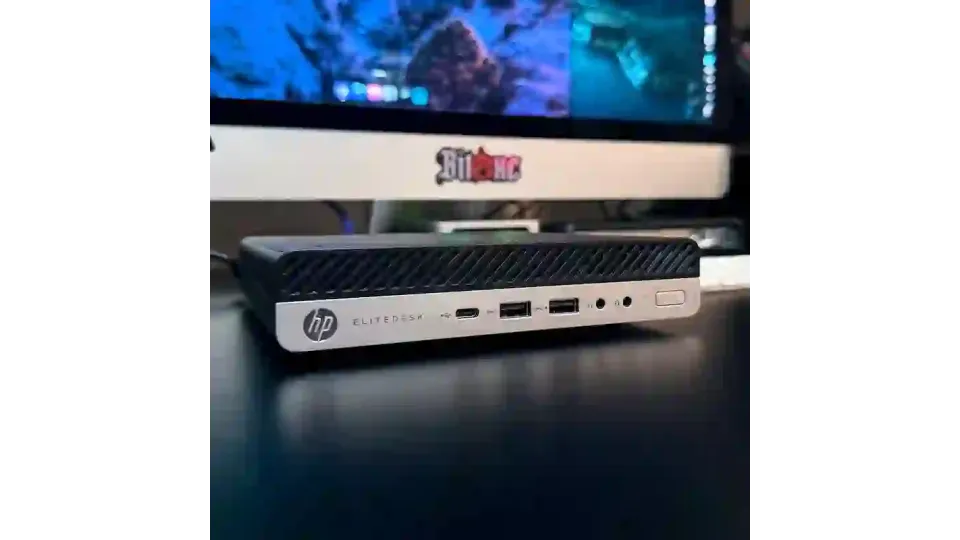
HP EliteDesk 705 G4 Mini PC – 16GB Ram - 256GB SSD NVMe – 5tratumOS Multi-Chain Node
HP EliteDesk 705 G4 Mini PC – 5tratumOS Multi-Chain Node (256GB SSD) Condition: Used – fully tested and prepared. May show minor cosmetic wear...
£149.95
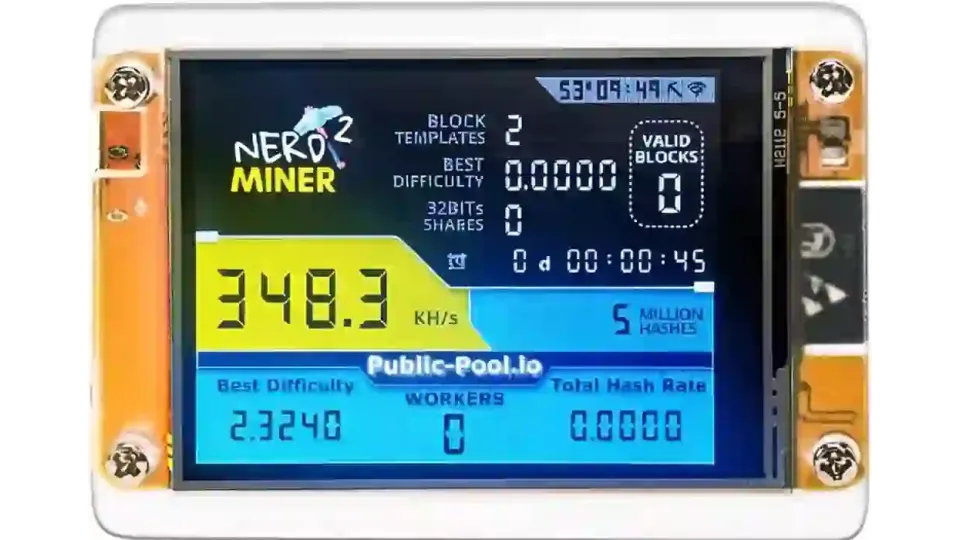
NerdMiner V2 350KH/s Home Bitcoin Miner – Quiet ESP32
The NerdMiner V2 is a compact, standalone Bitcoin lottery miner designed for hobbyists, educators, and tech enthusiasts who want to explore real Bitco..
£17.95
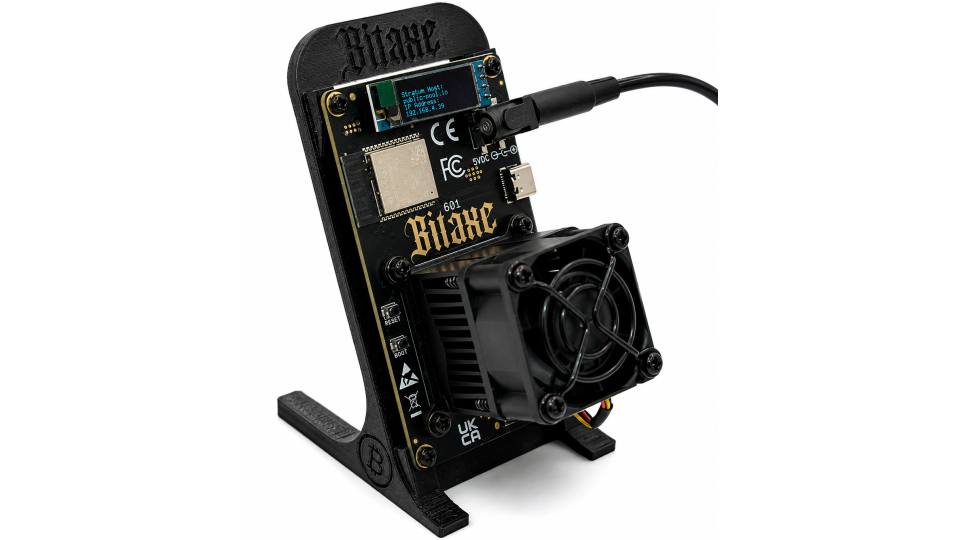
Bitaxe Gamma 601 Solo Bitcoin Miner – 1.07 to 1.2TH/s 18W BM1370
The Bitaxe Gamma 601 is one of the most powerful open-source single-ASIC Bitcoin miners currently available. Designed for desktop use, the Gamma repre..
£59.95