
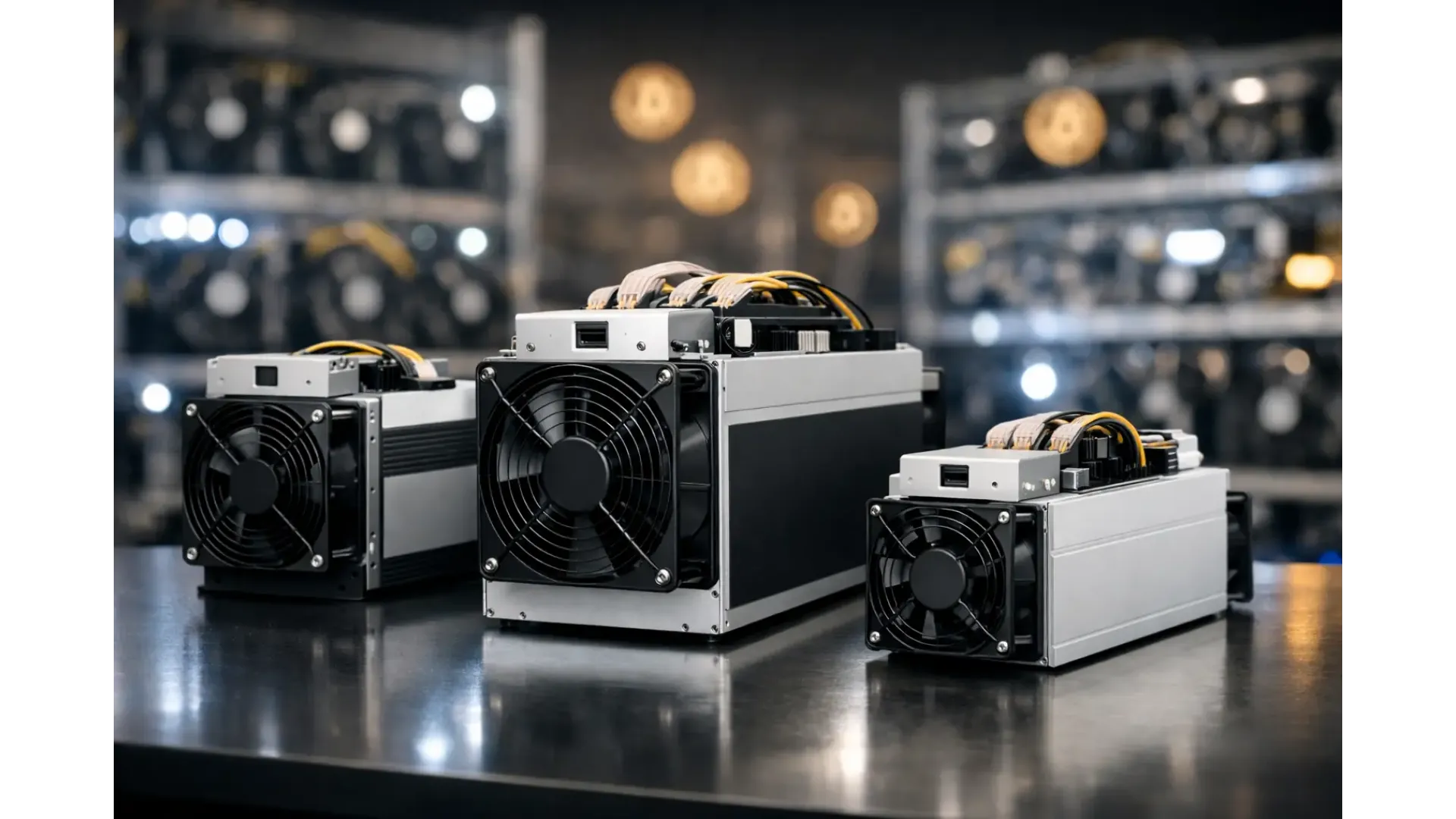
If you are shopping for the best ASIC miners 2026, the wrong question is often, "Which machine has the biggest headline hashrate?" The better question is which miner fits your power rate, noise limits, ventilation, budget and payout strategy. For most buyers, that matters more than chasing the newest spec sheet.
The 2026 market is unlikely to reward careless buying. Hardware keeps moving, network difficulty rarely stands still, and electricity remains the line item that decides whether a machine is productive or simply expensive to run. That means the best purchase is not one universal model. It depends on where and how you plan to operate.
What makes the best ASIC miners 2026 worth buying
A good ASIC miner is not just fast. It needs to convert electricity into hashrate efficiently, run with stable thermals, and fit the environment you have available. A high-output unit may look attractive on paper, but if it trips circuits, overheats in a garage in July, or makes too much noise for a home setting, it is not the right machine.
Efficiency should sit near the top of your checklist. In practical terms, miners with better joules-per-terahash figures give you more room when network difficulty rises or Bitcoin price weakens. That buffer matters. A machine that is slightly more expensive upfront can become the better value if it stays viable for longer.
Build quality and support matter too. Fans, power delivery and control boards are not exciting when you are comparing specifications, but they become very relevant once the machine is on-site. Buyers who want dependable operation tend to do better with specialist mining retailers that understand warranty handling, shipping expectations and setup questions, rather than treating ASICs like generic electronics.
Best ASIC miners 2026 for different types of buyer
The most useful way to assess the market is by buyer profile rather than by one absolute ranking. A home miner has different constraints from a small-scale operator with dedicated power and extraction.
For home miners
Home mining is where many buying mistakes happen. The machine may be profitable on paper, yet impossible to live with. Full-size ASIC miners are loud, hot and power-hungry. If you are running from domestic supply, your practical limits may be stricter than your budget.
For home use, the best option is often not the highest-performance unit but a lower-power or quieter setup that can run consistently. In 2026, that will still favour buyers who are realistic about sound levels, airflow and circuit capacity. A smaller ASIC or a purpose-built home mining device can make more sense than forcing an industrial unit into a spare room or shed with marginal ventilation.
That does not mean home mining is only for beginners. Plenty of technically capable buyers prefer a controlled, smaller footprint because it reduces setup friction and lowers the chance of downtime caused by heat or power issues.
For enthusiasts and small operators
If you have suitable power infrastructure and proper extraction, the equation changes. Here, a larger air-cooled ASIC can still be the most sensible route, provided the efficiency is competitive and the power draw fits your site. In this bracket, the best ASIC miners 2026 will likely be models that balance strong hashrate with realistic running costs, not simply the newest flagship at any price.
Hydro-cooled units may also look more attractive for buyers with the right environment, especially where density and thermal control matter. The trade-off is complexity. They are not the easy option for most retail buyers, and they make little sense if your site is not designed for them.
For value-led buyers
Pre-owned miners will remain relevant in 2026 because not every buyer needs the newest generation. A well-priced used ASIC can still be a sensible purchase when the entry cost is lower and expectations are clear. The risk, of course, is condition. Fan wear, previous operating history and general handling all affect long-term value.
For value-led buyers, the key is to treat used hardware as a different category, not a cheap version of new stock. Ask whether the efficiency is still acceptable, whether replacement parts are practical to source, and whether the purchase price leaves enough margin for the machine to make sense after electricity costs.
The specifications that actually matter
Hashrate gets attention because it is easy to compare, but it should never be read in isolation. Two miners with similar output can perform very differently once power consumption is factored in. If your electricity is expensive, efficiency may matter more than a modest increase in terahash.
Noise is another area buyers often underestimate. Full-size ASIC miners are not discreet. If the machine is for a domestic setting, assume that sound management is part of the purchase, not an optional afterthought. The same applies to heat. Every watt consumed becomes heat that must go somewhere.
You should also check PSU compatibility, operating temperature range and network setup requirements. These details can slow a deployment if ignored. A miner that looks easy to buy can become inconvenient if it requires electrical changes, special cabling or more aggressive cooling than expected.
How to compare ASIC miners without relying on hype
Marketing claims are common around every new product cycle, especially when a machine is announced with impressive peak figures. The practical approach is to compare miners across four points: efficiency, delivered power draw, expected operating conditions and total acquisition cost.
Delivered power draw matters because the real number on-site is what affects your electricity bill and your circuit planning. Operating conditions matter because some machines only perform at their best in well-managed environments. Total acquisition cost matters because shipping, import friction, accessories and possible infrastructure upgrades can change the economics quickly.
That is also why buyers in the UK often prefer dealing with a specialist supplier rather than piecing together hardware from multiple sources. Fast dispatch, clear returns information, warranty handling and direct support are not extras. They reduce risk.
Should you wait for newer models?
Sometimes yes, sometimes no. If a major release is clearly close and your current hardware is still adequate, waiting can be sensible. New launches can improve efficiency or put downward pressure on older stock pricing. But there is a cost to waiting too. If you delay for six months chasing the next release, that is six months without uptime.
The better approach is to buy when the machine in front of you works for your numbers today. If the return only makes sense with optimistic assumptions about Bitcoin price or perfect operating conditions, it is probably not the right purchase. If it remains acceptable under more conservative assumptions, the machine is usually worth closer consideration.
Home mining in 2026 means planning the full setup
The miner is only one part of the system. Buyers comparing the best ASIC miners 2026 should budget for extraction, ducting, electrical safety, network reliability and, in some cases, a pool node or solo mining setup. Missing those details leads to poor performance and avoidable support issues.
This is where specialist retailers such as Ehasher tend to be more useful than broad electronics sellers. The product range is built around mining-specific use cases, including home devices, ASIC systems, accessories and node hardware, so buyers can match equipment to an actual setup rather than just a headline specification.
If you are new to ASICs, keep the first deployment simple. One machine that runs reliably is better than two machines that push your circuits, create ventilation problems and need constant intervention. If you are experienced, the same principle still applies at a larger scale: stable operation usually beats theoretical peak performance.
The most common buying mistake
The biggest mistake is buying for excitement rather than fit. A top-tier ASIC may be an excellent machine and still be a poor choice for your site. The opposite is also true. A modestly specced miner can be the better asset if it suits your power price, available space and tolerance for noise.
There is also a tendency to treat mining hardware as if the decision ends at checkout. It does not. The real purchase includes delivery reliability, after-sales support, warranty clarity and access to parts or accessories. Those factors affect ownership far more than many buyers expect.
The best result in 2026 will usually come from a straightforward buying process: match the hardware to your environment, prioritise efficiency over hype, and be honest about what your setup can support. Do that, and you are far more likely to end up with a miner that earns its place rather than becoming a costly compromise.