
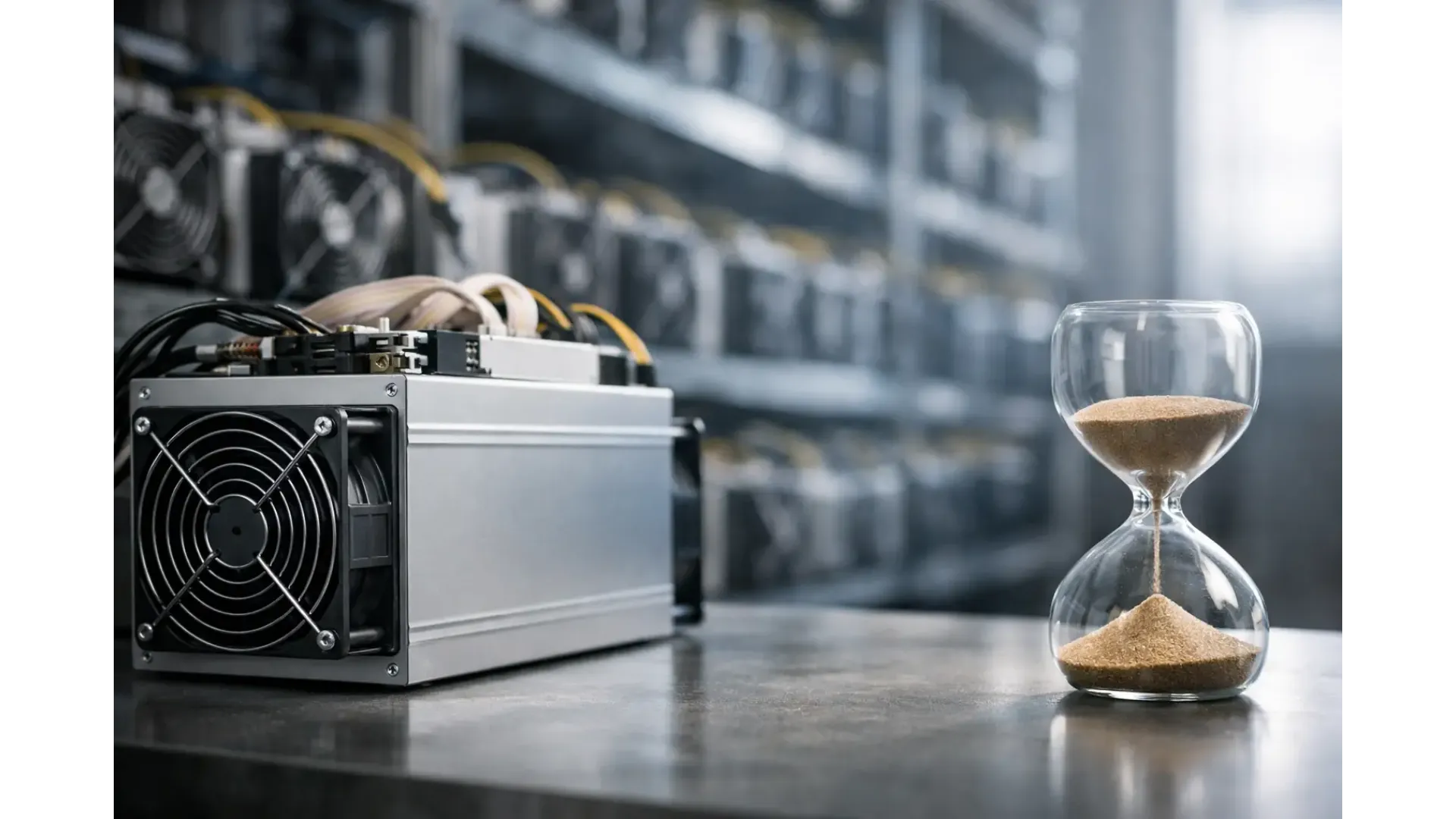
A miner that still powers on after five years is not always a miner you still want to run. That is the real answer behind how long do ASIC miners last. Physical lifespan and profitable lifespan are not the same thing, and buyers who understand that early tend to make better hardware decisions.
In most setups, a well-built ASIC miner can last around three to six years in active use. Some units run longer, especially in clean, temperature-controlled environments with stable power. Others deteriorate far earlier because of heat, dust, voltage instability, neglected fans, or simple overuse. For most buyers, the better question is not just whether the machine survives, but whether it remains efficient, reliable and commercially sensible to keep online.
How long do ASIC miners last in real terms?
There are two ways to measure lifespan. The first is hardware survival. This means the control board, hash boards, fans and power supply continue functioning well enough for the machine to mine. The second is operational usefulness. This means the unit still produces enough hashrate at an acceptable power draw to justify the electricity, space and noise.
On hardware survival alone, three to six years is a realistic working range for many ASIC miners. Premium models with good power delivery and sensible thermal management can go beyond that. Lower-cost units, heavily stressed machines and poorly maintained second-hand devices can fail much sooner.
Operational usefulness is more variable. In Bitcoin mining especially, newer generations tend to outperform older units on efficiency. A miner may still work after four years, but if its joules per terahash are no longer competitive, the machine can become difficult to justify unless electricity costs are unusually low or the device is being used for hobby mining.
What actually wears out on an ASIC miner?
ASIC miners are specialised machines, but they still fail in familiar ways. Fans are often among the first moving parts to degrade. Bearings wear, dust builds up and cooling performance drops. Once cooling weakens, heat starts affecting other components.
Power supplies are another common weak point. Poor power quality, sustained high loads and ambient heat all shorten PSU life. Hash boards can also degrade over time, especially if chips have been run hot for extended periods. Sometimes the issue is not total failure but partial failure, where one board drops out and the miner continues at reduced output.
Control boards generally last longer, though firmware issues, electrical faults and corrosion can still create problems. Cables, connectors and solder joints are often overlooked, but repeated thermal cycling can gradually stress them. That is why an ASIC miner’s lifespan is rarely about one dramatic breakdown. More often, it is a series of smaller failures and performance losses.
The biggest factors that affect ASIC miner lifespan
Heat is the single biggest factor. ASICs are designed to run hot, but prolonged exposure to excessive temperatures accelerates wear across the whole system. If intake air is already warm, fans have to work harder, components sit under more stress and the margin for error gets smaller.
Dust comes next. Fine dust clogs heatsinks, slows fans and traps heat where it should not be. In garages, sheds and utility spaces, this is often what quietly shortens hardware life. A miner in a clean indoor environment can outlast an identical model in a dusty room by a wide margin.
Power quality matters more than many new buyers expect. Voltage fluctuation, poor cabling, overloaded circuits and unsuitable extension leads can all contribute to instability and component wear. Cheap power is not useful if it is unreliable.
Then there is operating strategy. Some users push machines aggressively with custom firmware and overclocking. That can improve output, but it usually comes with more heat and higher stress. Underclocking, by contrast, can reduce wear and improve efficiency, though at the cost of lower raw hashrate. There is always a trade-off.
How long do ASIC miners last if you buy used?
Used ASIC miners can still offer strong value, but lifespan becomes more model-specific and condition-specific. A pre-owned machine might run well for years, or it might arrive with hidden wear from round-the-clock use in a harsh farm environment.
The key issue is not just age. It is how the miner has been treated. A two-year-old machine from a clean, stable setup may be a safer purchase than a one-year-old machine that has been overclocked, poorly cooled and rarely cleaned. Buyers should think in terms of remaining service life, not manufacturing date alone.
This is where seller quality matters. Clear testing, realistic condition grading and warranty support reduce risk. For buyers who want to enter mining without paying new-unit pricing, that support can make the difference between a practical purchase and a costly repair project.
Signs your ASIC miner is ageing
Performance decline is often gradual. The first sign may be rising temperatures under the same ambient conditions. Then fan speeds increase more frequently, noise becomes less consistent, or hashrate starts fluctuating without an obvious network-side reason.
Hardware errors are another warning sign. A miner that still runs but throws more chip errors, restarts unexpectedly or intermittently loses a board may be approaching a more serious fault. Power supply instability can show up in similar ways.
Not every issue means the machine is finished. Sometimes a deep clean, fan replacement, fresh thermal attention or a power supply swap is enough to restore stable performance. The practical decision is whether the repair cost and downtime still make sense relative to the miner’s expected output.
Can you make an ASIC miner last longer?
Yes, but maintenance extends lifespan within limits. It does not stop hardware ageing or market obsolescence.
The basics matter most. Keep the miner in a clean, dry, ventilated space. Manage intake temperatures. Inspect for dust before it becomes compacted into heatsinks. Use stable power infrastructure sized properly for the load. If the machine is running unusually hot or loud, address it early rather than waiting for a fault.
Firmware settings also matter. Chasing every last terahash is not always the right move, especially in home setups. A slightly lower-performance profile can reduce thermal stress and often produces a better long-term result. For many small-scale operators, consistent uptime is worth more than occasional peak output.
Routine observation helps as well. You do not need to strip down a miner every week, but checking temperatures, fan behaviour, board status and hashrate trends can catch problems before they become expensive.
Lifespan versus profitability
This is where many buyers misjudge the question. Even if an ASIC miner lasts physically, mining economics can change faster than the hardware itself. Network difficulty rises, newer models arrive, and electricity rates reshape what is viable.
A machine that was attractive at launch can become marginal later, even with no fault at all. That does not make it useless. It may still suit hobby mining, educational setups, home heat reuse, low-cost power environments or niche solo mining interests. But the role of the machine changes.
For buyers comparing models, lifespan should be considered alongside efficiency, support, noise level, cooling demands and expected use case. The cheapest unit is not always the best value if it is already near the end of its practical window. Equally, the newest unit is not always necessary if your goal is entry-level mining or experimentation.
What should buyers expect before purchasing?
A sensible expectation is this: a good ASIC miner should deliver several years of service if it is properly housed, correctly powered and realistically operated. That does not mean zero maintenance, and it does not guarantee that the machine will remain economically competitive for that entire period.
If you are buying for home mining, pay close attention to environment and support. Heat, noise and dust management are not side issues. They are part of hardware longevity. If you are buying used, condition transparency and seller testing are especially important. If you are buying new, think beyond launch specifications and consider how the miner fits your electricity cost and operating plan.
For specialist retailers such as Ehasher, this is where category focus matters. Buyers are not just choosing a box with a hashrate figure. They are choosing a machine with a service life, a support requirement and a practical operating profile.
The useful answer to how long do ASIC miners last is usually long enough to reward careful buying and careful operation, but not long enough to ignore efficiency, environment or maintenance. Treat the machine like dedicated hardware rather than a disposable gadget, and you give it the best chance of staying productive for as long as the economics allow.