
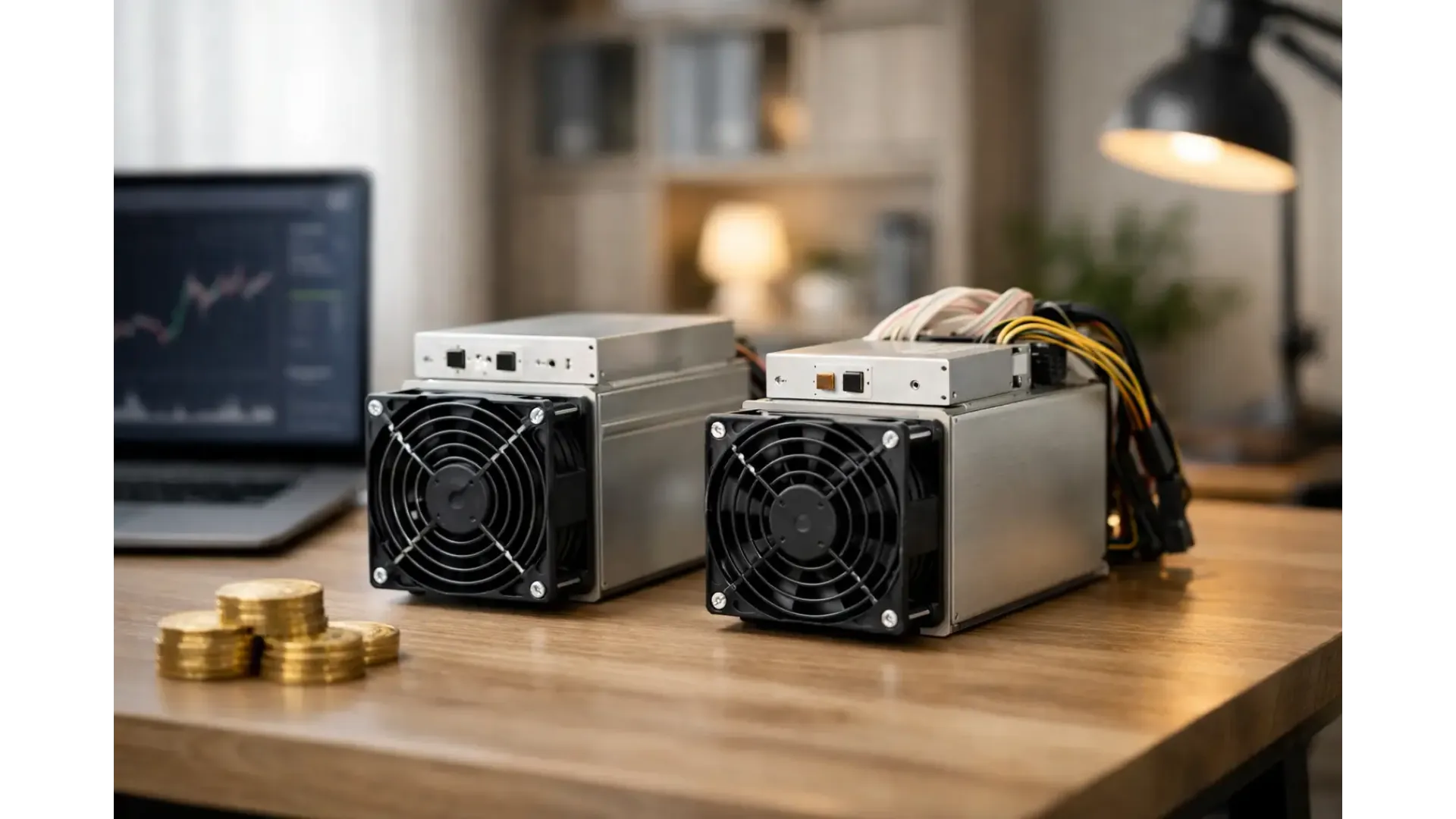
A lot of first-time buyers expect the hard part to be choosing a coin. In practice, the hard part is choosing hardware that fits your power costs, available space and tolerance for noise. That is why entry level ASIC miners matter. They give newer miners a way to start with purpose-built hardware without jumping straight into the biggest, hottest and loudest machines on the market.
For most home users, the right starting point is not the most powerful unit available. It is the machine you can actually run reliably. That means looking beyond headline hashrate and checking efficiency, wattage, cooling requirements, network compatibility and whether the unit makes sense for your electricity tariff.
What entry level ASIC miners actually are
Entry level ASIC miners are specialist mining devices designed to do one job well, but at a smaller or more manageable scale than industrial units. In Bitcoin mining, that usually means lower upfront cost, lower total power draw or a form factor that is more realistic for home use.
That does not always mean weak performance. Some entry-level units are simply older-generation ASICs, pre-owned machines, compact lottery-style miners or lower-power models aimed at enthusiasts rather than farm operators. The common thread is accessibility. They reduce the barrier to entry in terms of budget, setup complexity or household practicality.
There is a trade-off, of course. Lower cost often means lower hashrate, and lower hashrate means a smaller chance of earning meaningful returns unless your setup is very efficient or your goals are broader than short-term profit. Many buyers use these machines to learn the process, experiment with solo mining, run a quiet home setup or build experience before moving to larger equipment.
Who should buy entry level ASIC miners
If you are new to mining and want dedicated hardware rather than a general-purpose computer, this category makes sense. It also suits buyers who want to test power usage, ventilation and network stability before investing more heavily.
Home miners are the clearest fit, especially those with limited room, shared living space or concern about breaker limits. A first machine in a garage, utility room or small outbuilding is very different from fitting out a full mining site. Entry-level equipment lets you learn those practical details without taking on the cost and disruption of a larger deployment.
It also suits technically capable buyers who understand the basics of wallets, pools and firmware, but do not want to source hardware from multiple overseas sellers. In that case, support, warranty terms and straightforward delivery become part of the buying decision, not just the specification sheet.
The checks that matter before you buy
Hashrate gets attention because it is easy to compare, but it is only one part of the picture. A machine with a moderate hashrate and sensible efficiency can be a better buy than a more powerful unit that is expensive to run in a domestic setting.
Power draw should be checked first. If a miner pulls more power than your intended circuit can handle comfortably, the rest of the specification becomes irrelevant. UK home users should think carefully about socket load, extension leads, dedicated circuits and how long the machine will run continuously. Mining hardware is not casual plug-and-play equipment in the way a desktop PC is.
Efficiency is just as important. Two miners with similar output may consume very different amounts of electricity. That difference shapes running cost every day the unit is online. If your tariff is high, efficiency usually matters more than chasing a slightly stronger hashrate.
Noise is where many first-time purchases go wrong. Even smaller ASICs can be far louder than expected. Fan-cooled units are often unsuitable for a spare room or office. If the machine is going into a home environment, ask whether you are buying a serious mining tool that belongs in a ventilated utility space, or a compact enthusiast device designed with quieter use in mind.
Heat follows the same logic. The electricity consumed by a miner largely becomes heat. In winter that may feel manageable. In a small room during warmer months, it becomes a problem very quickly. Ventilation is not optional. You need a clear plan for airflow before the miner arrives.
Entry-level does not always mean the same thing
There are a few different routes into ASIC mining, and they serve different buyers.
Older full-size ASICs can be a cost-effective starting point if the purchase price is low enough and electricity is reasonably priced. They offer a more realistic introduction to conventional mining hardware, but they can be noisy, less efficient and more demanding in terms of power and cooling.
Compact solo miners sit at the other end of the scale. These are often chosen for learning, hobby use or home experimentation. They are more approachable in size and power draw, but expectations need to be realistic. They are not usually the fastest route to mining income. They are a way to participate, learn the process and run dedicated hardware without industrial overhead.
Pre-owned machines also deserve attention. For many buyers, pre-owned ASICs are the actual entry-level route because they bring the initial spend down. The key is buying from a specialist retailer that understands testing, condition grading and support. A cheap machine with unclear history can become expensive if it arrives with degraded hashboards or unreliable fans.
Profitability is not the only reason to start
Many first-time miners ask a simple question: will it make money? That is fair, but the answer depends on too many moving parts to treat as fixed. Electricity cost, network difficulty, machine efficiency, pool fees and Bitcoin price all affect outcomes.
For that reason, entry level ASIC miners are often best viewed as a controlled starting point rather than a guaranteed profit engine. Some buyers want direct exposure to mining as an activity. Others want to understand setup, firmware, pool connection and thermal management before scaling up. That has value in its own right.
If your main objective is immediate return, you need to be strict with the numbers. If your objective is to start mining with lower risk and learn how purpose-built hardware behaves in a real environment, the range of suitable products becomes wider.
Setup considerations for home users
The easiest miner to buy is not always the easiest miner to live with. Before ordering, think about where it will run, how it will connect and who else will hear it.
A stable wired internet connection is preferable. Wi-Fi may work for some devices, but Ethernet is usually the safer option for reliability. You should also factor in dust levels, ambient temperature and whether the room can exhaust hot air effectively. A cupboard with no airflow is not a mining solution.
Power supply requirements need close attention. Some machines include everything needed to get started, while others require separate components or specific cabling. That is one reason specialist retailers are useful. Clear product categorisation and direct support reduce the chance of ordering a miner that does not match your intended setup.
For new buyers, support can matter as much as hardware grade. Being able to confirm compatibility, expected noise levels, delivery terms and warranty coverage before purchase removes a lot of avoidable friction. That is particularly true with pre-owned equipment or niche solo mining devices.
How to choose the right first machine
Start with your constraints, not your ambition. Set a realistic budget, check your electricity rate, decide where the miner will live and be honest about acceptable noise. Once those points are fixed, the shortlist becomes much clearer.
If you want a true home-friendly learning device, a compact low-power miner may be the right fit. If you have a garage or workshop space and want stronger performance, an older or smaller full ASIC may make more sense. If budget is tight, pre-owned hardware can be a sensible entry point provided the seller offers proper support and transparent condition information.
This is where a specialist store such as Ehasher fits naturally. A focused mining catalogue makes it easier to compare ASICs, solo miners, accessories and supporting hardware without sorting through unrelated electronics. For first-time buyers, that matters because the best choice usually depends on the complete setup, not just the machine itself.
What a sensible first purchase looks like
A sensible first purchase is not the cheapest miner and it is not the most powerful one. It is the unit that matches your site conditions, power availability and expectations. In many cases, that means accepting slightly lower hashrate in exchange for a setup you can run consistently and safely.
That approach also gives you a better base for future decisions. Once you have lived with one miner, you understand noise, heat, cabling, firmware access and operating cost far more clearly than any product page can explain. From there, scaling up becomes a practical decision rather than a speculative one.
If you are considering entry level ASIC miners, treat the first machine as a test of fit. Choose hardware you can support properly, buy from a retailer that understands mining equipment, and make sure the machine suits your environment as well as your budget.