
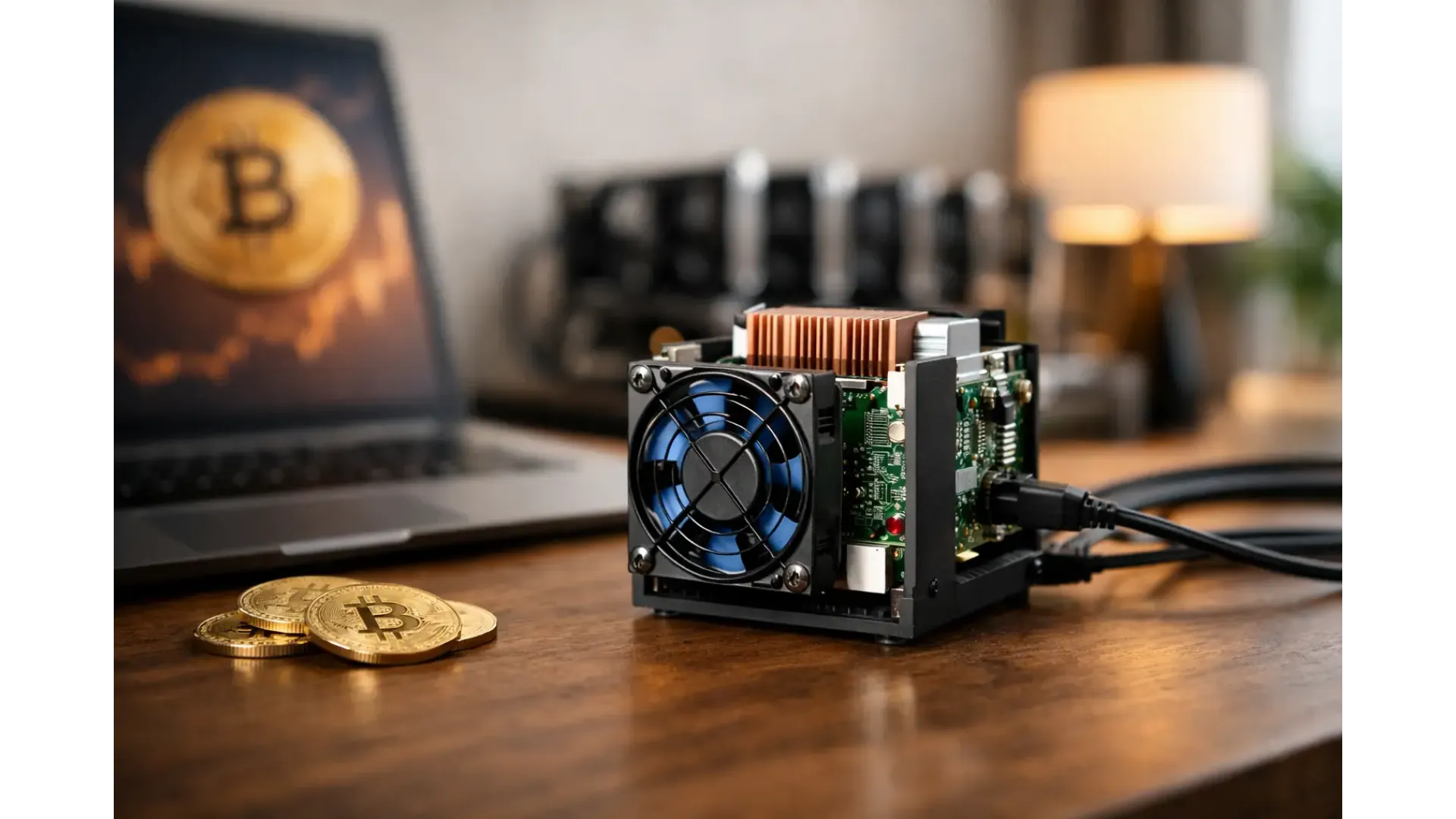
A Bitaxe miner review needs to start with the obvious question buyers usually ask after seeing one for the first time: is this a serious Bitcoin miner, or just a clever hobby board with a fan attached? The answer sits somewhere in the middle. Bitaxe devices are real Bitcoin miners built around modern ASIC chips, but they are designed for low-power, small-scale use rather than outright production. That distinction matters, especially if you are buying for home use and expecting results similar to a full-size ASIC.
For the right buyer, Bitaxe is genuinely useful. It offers a compact way to learn solo mining, run a quiet desktop setup, or add a low-power device to a broader home mining environment. For the wrong buyer, it can be disappointing very quickly. If your target is daily income at anything close to traditional ASIC levels, a Bitaxe is not the right tool.
Bitaxe miner review: what it actually is
Bitaxe is best understood as an open-source, compact Bitcoin miner built for enthusiasts who want direct control over their hardware. It is not in the same class as a rack-mounted ASIC from Bitmain or MicroBT. It is much smaller, much lower power, and much more accessible for home users who do not want the heat, noise, and electrical demands of industrial equipment.
Most Bitaxe units use a single ASIC chip on a compact board, paired with a controller, cooling solution, and simple web-based management. The appeal is straightforward. You get real SHA-256 mining capability in a format that can sit on a desk, shelf, or home lab bench without dominating the room.
That makes Bitaxe more comparable to a specialist hobby miner than a revenue-first mining machine. It is practical for testing, learning, lottery-style solo mining, and low-power operation. It is not practical as a substitute for a high-hashrate ASIC if your primary goal is maximum output.
Who a Bitaxe miner is actually for
The best fit is a home miner who understands the trade-off between convenience and performance. If you want a device that is easy to accommodate in a house or flat, has relatively modest power demands, and gives you direct exposure to Bitcoin mining hardware, Bitaxe makes sense.
It also suits users who enjoy tinkering. Because Bitaxe has an open-source background, it tends to attract technically minded buyers who are comfortable checking firmware versions, adjusting settings, and understanding the basics of pool or solo configuration.
Where people go wrong is assuming low power means easy profit. Low power does reduce running costs, but it also comes with very low hashrate compared with mainstream ASICs. So the buyer profile matters. If you want a quiet device to experiment with and keep running continuously, it fits. If you want a machine to aggressively chase return on investment, it usually does not.
Performance and hashrate in real terms
The main performance conversation in any Bitaxe miner review is hashrate relative to power draw. Bitaxe units are efficient for their size, but the absolute hashrate remains modest. You are measuring performance in a range suitable for hobbyist mining, not serious farm output.
That does not mean the performance is poor. It means performance needs to be judged against purpose. For a compact single-chip miner, Bitaxe can deliver respectable results. For a buyer comparing it with a full ASIC, the output will look tiny.
This is where expectations need to be set correctly. A Bitaxe is not trying to compete with large air-cooled ASICs. It is trying to offer a usable, manageable way to mine Bitcoin from home without specialist electrical work, heavy ventilation planning, or constant noise. On that basis, it performs well.
Efficiency can vary depending on the exact model, firmware tuning, ambient temperature, and silicon quality. Some users will undervolt for cooler and quieter operation, while others will push clocks higher to gain extra hashrate. That flexibility is part of the appeal, but it also means real-world results are not perfectly uniform.
Noise, heat and power draw
This is one of the strongest reasons to consider Bitaxe. A traditional ASIC can be completely impractical in a domestic setting because of fan noise and heat output. Bitaxe is far easier to live with.
Power draw is low enough for ordinary home use, and that changes the buying decision considerably. You are not planning around a dedicated circuit or wondering whether a room will become uncomfortably hot after an hour. Heat is still present, because all miners produce heat, but it is manageable rather than intrusive.
Noise levels depend on the enclosure and fan profile, but Bitaxe is generally much more suitable for a home office, workshop, or technical desk space than standard ASIC hardware. It is not silent, and anyone expecting completely inaudible operation should be cautious, but it is in a different category from the typical mining machine that sounds like a server cabinet at full speed.
For many home users in the UK, this is the deciding factor. A miner you can actually keep running is often more useful than a theoretically better machine you cannot tolerate in the house.
Setup and day-to-day use
Bitaxe is usually more approachable than larger ASIC equipment, but it still helps to have basic mining knowledge. You will need to configure network access, choose a mining destination, and monitor stability. None of that is especially difficult, though complete beginners may still need a little guidance.
The management experience is one of Bitaxe's better points. Web-based configuration tends to be simple enough for routine use, and the small-scale nature of the device means there is less operational overhead. You are not dealing with a large industrial unit that demands constant environmental management.
That said, open-source hardware can involve more variation than fully standardised mass-market miners. Depending on where the unit comes from, build quality, enclosure finish, cooling setup, and firmware state may differ. Buying from a specialist retailer that understands mining hardware is useful here, because support and product consistency matter more with niche devices.
Solo mining appeal versus practical reality
A lot of Bitaxe interest comes from solo mining. That is understandable. Small open-source miners have a strong appeal for users who like the idea of independently hashing for a block, even if the odds are long.
The practical reality is simple: solo mining with a low-hashrate device is a lottery. It is technically possible, but not statistically reliable as a returns strategy. If you enjoy the concept and understand the odds, that is fine. If you are treating solo mining as a predictable income model, it is the wrong expectation.
For pooled mining, the proposition is more grounded, although earnings are still limited by the miner's modest output. This is why Bitaxe works best when it is bought for the experience, the learning value, the home-friendly form factor, or as part of a broader setup rather than as a standalone profit engine.
Build quality and reliability
Build quality depends heavily on the source and assembly standard. The Bitaxe platform itself is well regarded in enthusiast circles, but the finished device can vary. A well-assembled unit with decent cooling and proper testing is a different proposition from a loosely finished board sold with minimal support.
Reliability over time comes down to thermal management, power stability, and sensible tuning. If the miner is pushed too hard in a warm room, long-term stability may suffer. If it is run conservatively with adequate airflow, it can be a dependable low-power miner.
This is where specialist retail matters. Buyers are not just choosing a board. They are choosing how much reassurance they want around shipping, warranty, and direct support if something is not behaving as expected.
Bitaxe miner review: is it worth buying?
If you want a compact Bitcoin miner for home use, Bitaxe is easy to recommend with the right expectations. It offers genuine ASIC mining in a format that is far easier to power, place, and manage than a conventional full-size miner. For learning, tinkering, solo mining experiments, and low-noise domestic use, it has a clear place.
If your priority is pure output and return, the answer changes. A Bitaxe does not replace a proper high-hashrate ASIC, and it should not be bought as though it does. The economics are simply different. You are paying for accessibility, lower power demand, and enthusiast appeal, not industrial performance.
For many buyers, that is enough. Not every mining purchase needs to be built around maximum terahash. Sometimes the better choice is the miner you can run comfortably, understand fully, and keep operating without turning your home into a server room. If that sounds like your use case, Bitaxe is a sensible piece of hardware to take seriously.
Related Product
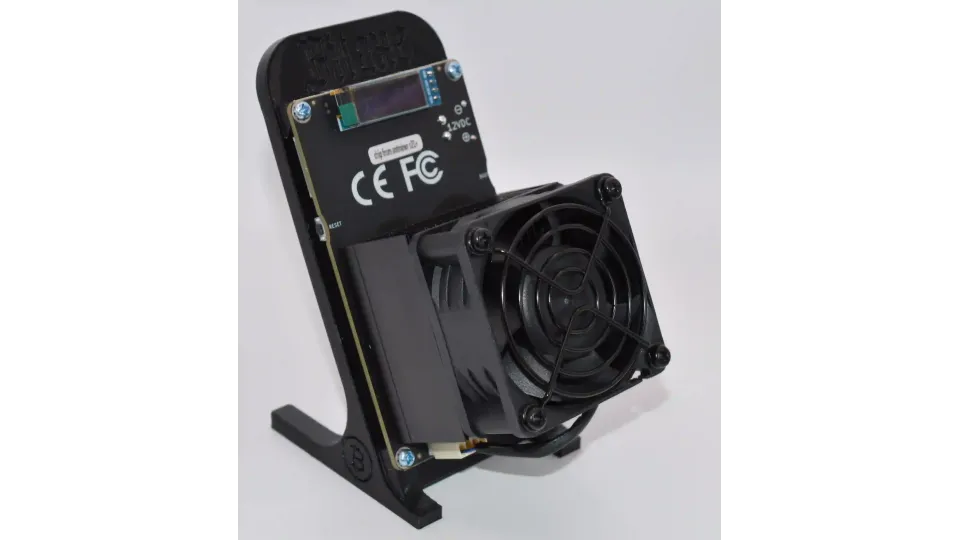
Bitaxe Gamma Turbo 801 Home Bitcoin Miner – Black – 2.07 to 2.4 TH/s
The Bitaxe GT 801 in black is an upgraded compact Bitcoin miner built for home users, hobbyists, and crypto enthusiasts who want efficient mining with..
£109.95
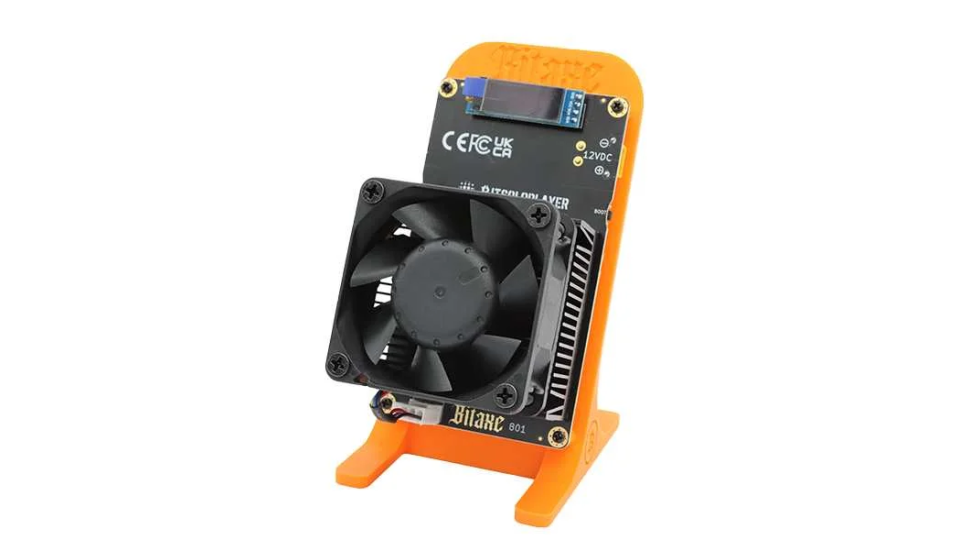
Bitaxe Gamma Turbo 801 Home Bitcoin Miner – Orange – 2.07 to 2.4 TH/s
The Bitaxe GT 801 in orange is an upgraded compact Bitcoin miner designed for home users, hobbyists, and crypto enthusiasts who want efficient mining ..
£109.95