
The Silicon Lottery Explained: Why Two Identical Bitcoin Miners Can Perform Differently
Ever wondered why two Bitcoin miners of exactly the same model can produce different hash rates, temperatures and power consumption?
You might purchase two identical ASIC miners, install the same firmware, use the same power supplies and configure them with exactly the same settings. Yet one performs perfectly while the other runs hotter, consumes slightly more electricity or struggles to maintain the same hash rate.
This is a perfectly normal phenomenon in semiconductor manufacturing, commonly known as the Silicon Lottery.
In this guide, we’ll explain what the silicon lottery means, why it affects Bitcoin mining hardware and why achieving the highest possible hash rate isn’t necessarily the best approach.
What Is the Silicon Lottery?
The term silicon lottery describes the natural performance differences between semiconductor chips, even when those chips are manufactured to the same specifications.
ASIC stands for Application-Specific Integrated Circuit. In Bitcoin mining, these specialised chips are designed to perform SHA-256 hashing calculations as efficiently as possible.
Although two ASIC chips may look identical and carry the same model number, their electrical characteristics can differ slightly.
For example:
- One ASIC may operate reliably at a particular frequency using less voltage.
- Another may require slightly more voltage to achieve the same performance.
- One chip may generate more heat under the same workload.
- Another may remain stable at frequencies that cause errors on a different chip.
These differences don’t automatically indicate a manufacturing defect or faulty hardware.
They are simply part of the manufacturing process.
Why Aren’t All ASIC Chips Exactly the Same?
ASIC chips are manufactured using extremely sophisticated processes involving microscopic electrical components called transistors.
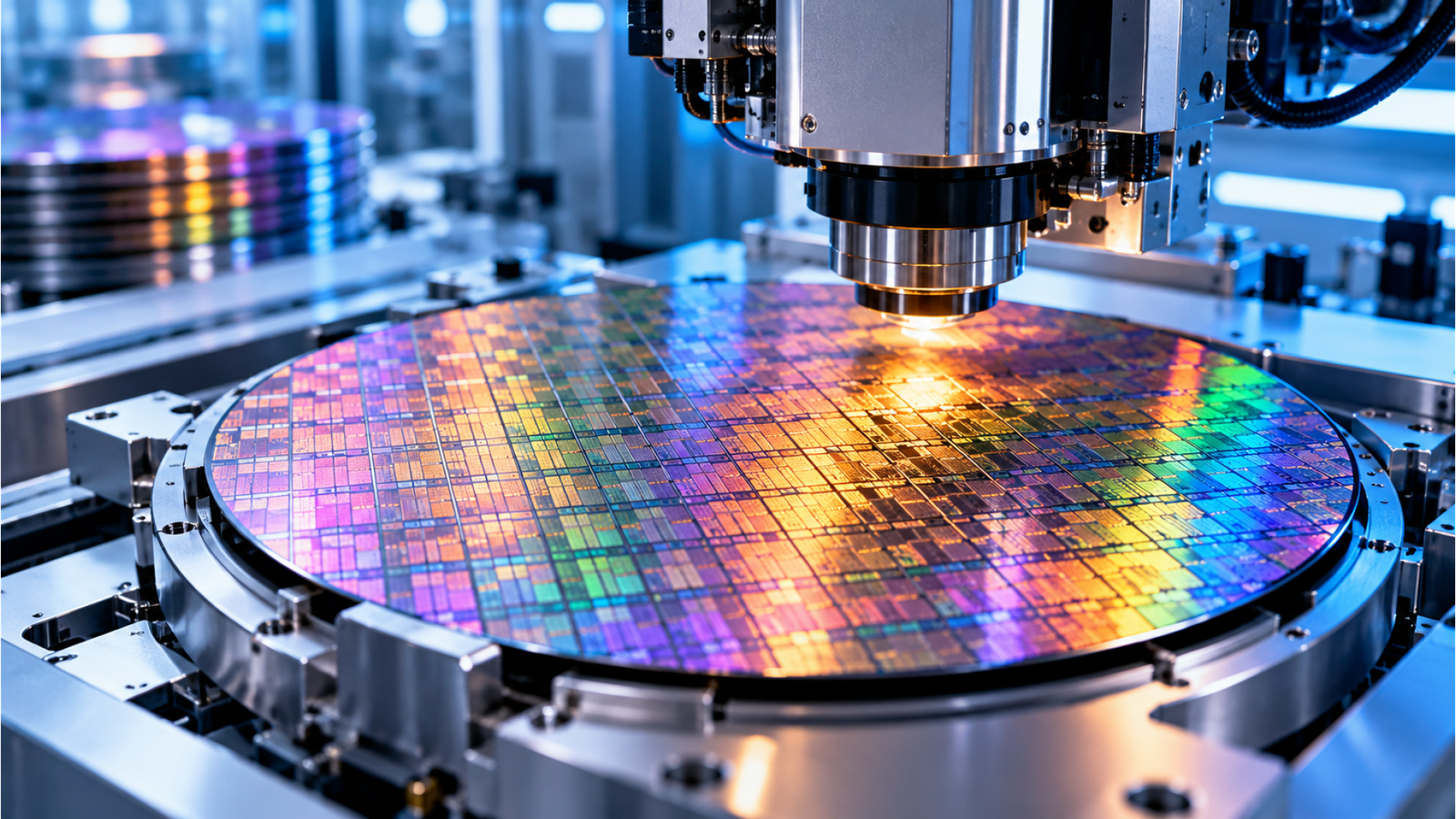
Thousands of individual chips can be produced from a single circular silicon wafer.
Although manufacturers use highly controlled production environments, creating absolutely identical chips is practically impossible.
Tiny variations in the manufacturing process can influence how individual transistors operate.
These variations may affect:
Electrical efficiency: Some chips require less electrical power to perform the same amount of work.
Operating temperature: Certain chips naturally produce more heat than others.
Voltage requirements: One chip may need additional voltage to remain stable at a particular frequency.
Maximum stable frequency: Some chips can operate reliably at higher speeds, while others reach their practical limits sooner.
Manufacturers account for these variations when establishing standard operating specifications.
This is one reason why factory settings are generally more conservative than the maximum performance occasionally demonstrated by enthusiasts.
How Does the Silicon Lottery Affect Bitcoin Mining?
Let’s imagine you have two identical home Bitcoin miners.
Both use the same ASIC chips, firmware, cooling arrangement and power supply specifications.
You configure both miners with identical frequency and voltage settings.
After several hours of operation, you notice the following results:
|
Measurement |
Miner A |
Miner B |
|---|---|---|
|
Hash rate |
6.5 TH/s |
6.1 TH/s |
|
Power consumption |
115 W |
121 W |
|
ASIC temperature |
56°C |
61°C |
|
Stability |
Stable |
Occasional errors |
These figures are illustrative examples, not measured specifications for a particular model.
Despite being identical products, Miner A is achieving slightly better performance while consuming less electricity.
Miner B is still functioning, but its individual ASIC characteristics may make it less efficient at those settings.
However, the silicon lottery isn’t the only possible explanation. Differences in heatsink contact, thermal paste application, voltage delivery and airflow can also influence these results.
The important point is that identical hardware specifications do not guarantee identical real-world performance.
Understanding Frequency, Voltage and Temperature
Three important factors influence how an ASIC miner performs.
1. Frequency
Frequency determines how quickly the ASIC operates.
Increasing frequency can improve hash rate, allowing the miner to perform more hashing calculations per second.
However, higher frequencies also increase the demands placed on the ASIC.
2. Core Voltage
Voltage provides the electrical conditions needed for the ASIC to operate.
Increasing frequency may require additional voltage to maintain stability.
Unfortunately, increasing voltage also increases power consumption and heat generation.
Two apparently identical ASIC chips may require different voltages to remain stable at the same frequency.
3. Temperature
Every ASIC has an operating temperature range.
As temperatures increase, electrical behaviour can change, potentially increasing power leakage and reducing stability.
Excessive heat can lead to hardware errors, unexpected restarts or reduced performance.
This is why effective cooling and sensible operating settings are so important.
Why Overclocking Doesn’t Produce the Same Results for Everyone
Overclocking involves operating an ASIC at a higher frequency than its standard configuration.
Within the Bitcoin mining community, it’s common to see impressive performance figures shared online.
You might see someone achieving a particularly high hash rate from a Bitaxe, NerdAxe or NerdQX and naturally wonder why your own miner cannot achieve the same result.
The answer may simply be the silicon lottery.
A particular miner might contain ASIC chips capable of sustaining higher frequencies with relatively modest voltage increases.
Another miner of the same model may require significantly more voltage to reach those frequencies, generating additional heat and potentially becoming unstable.
There is also an important distinction between a miner briefly displaying an impressive hash rate and maintaining that performance continuously.
A five-minute peak hash rate is not the same as reliable 24-hour operation.
Bitcoin mining is a continuous workload. Long-term stability matters considerably more than achieving an occasional record-breaking number.
Real-World Experience: Testing Home Bitcoin Miners
At eHasher, we understand the importance of individual hardware variation through our own assembly, configuration and testing of home Bitcoin mining equipment.
When working with multiple miners of the same model, we’ve seen first-hand that identical settings don’t always produce identical results.
Some units achieve their intended performance comfortably, while others may need slightly different settings to maintain comparable stability.
This is particularly relevant when testing multi-ASIC miners such as the NerdQX.
Even when cooling components, firmware and power supplies are consistent, small differences between ASIC chips can influence the final result.
For this reason, we believe it’s important to evaluate mining hardware based on sustained performance rather than simply the highest number displayed on a screen.
Why Higher Hash Rate Isn’t Always Better
It’s tempting to assume that more terahashes per second automatically means a better miner.
However, there’s more to consider.
Imagine two operating configurations:
|
Measurement |
Configuration A |
Configuration B |
|---|---|---|
|
Hash rate |
6.5 TH/s |
7.5 TH/s |
|
Power consumption |
110 W |
145 W |
|
Efficiency |
16.9 J/TH |
19.3 J/TH |
Illustrative figures only.
Configuration B produces more hashing power, but it also consumes considerably more electricity per terahash.
Configuration A is more energy-efficient.
Higher performance can also place greater demands on the power delivery system and cooling components.
For miners running continuously, these considerations can make a significant difference to operating costs and long-term reliability.
A higher hash rate can still be desirable, but it should be assessed alongside power consumption, temperatures and stability.
The Importance of Stable Firmware Settings
Firmware controls many important aspects of a Bitcoin miner, including ASIC frequency, core voltage and monitoring functions.
Choosing appropriate settings helps balance performance, efficiency and reliability.
At eHasher, our approach is increasingly focused on sensible, tested operating configurations.
Rather than encouraging customers to push every miner to its absolute limits, we favour settings that deliver consistent performance without unnecessary electrical or thermal stress.
Where applicable, our own eHasher firmware configurations are developed around tested operating parameters and controlled performance limits.
This approach helps establish more predictable operating behaviour, although no firmware configuration can eliminate individual chip variation or guarantee that hardware will never fail.
How to Get the Best Performance From Your ASIC Miner
Whether you’re running a Bitaxe, NerdAxe, NerdQX or another home Bitcoin miner, a few straightforward practices can make a substantial difference.
Start With Recommended Settings
Always begin with the manufacturer’s or supplier’s recommended operating configuration.
Allow the miner to run long enough to establish its normal temperature, power consumption and hash rate.
Monitor Temperatures
Pay attention to both ASIC and voltage regulator temperatures where monitoring is available.
Good airflow and appropriate ambient temperatures are essential for reliable operation.
Watch for Hardware Errors
A miner may display an impressive hash rate while simultaneously producing excessive hardware errors.
A rising error rate can indicate that the ASIC is operating beyond its stable limits.
Avoid Copying Extreme Overclocking Profiles
Settings shared online may work perfectly on someone else’s hardware but prove unsuitable for your particular miner.
Never assume that another user’s results are guaranteed to be achievable on your device.
Prioritise Continuous Operation
A miner that operates reliably around the clock may deliver more useful work over time than one that repeatedly crashes or restarts while attempting to achieve higher speeds.
For home Bitcoin mining, consistency is often the better choice.
Does the Silicon Lottery Mean My Miner Is Faulty?
Not necessarily.
Minor variations in temperature, efficiency and achievable performance are normal.
However, there is an important distinction between natural silicon variation and a genuine hardware problem.
A miner that cannot achieve its advertised operating specifications under the required conditions, repeatedly crashes at recommended settings or displays abnormal temperature readings may require investigation.
Possible causes include cooling problems, power supply faults, firmware issues or defective components.
The silicon lottery should never be used as an excuse to dismiss genuine faults.
Our Approach at eHasher
We believe home Bitcoin mining should be enjoyable, accessible and reliable.
While experimenting with ASIC performance can be an interesting part of the hobby, not every miner needs to operate at its absolute maximum capability.
Our focus is on supplying mining hardware that offers a sensible balance of hash rate, power consumption, cooling and long-term stability.
For equipment assembled or configured by eHasher, we aim to establish dependable operating settings through practical testing.
Ultimately, we’d rather see a customer enjoying a stable miner running continuously than dealing with repeated crashes while chasing an extra fraction of a terahash.
Final Thoughts
The silicon lottery is a normal part of semiconductor manufacturing and affects far more than Bitcoin mining equipment.
No two ASIC chips are guaranteed to behave in exactly the same way, even when they share identical specifications.
Understanding this helps explain why some miners run cooler, require different voltages or achieve slightly different results.
The most important lesson is simple:
The best Bitcoin miner isn’t necessarily the one achieving the highest possible hash rate. It’s the one delivering reliable, efficient and consistent performance for your intended use.
At eHasher, that’s the philosophy we believe home Bitcoin mining should be built around.
Explore our range of home Bitcoin miners and accessories at ehasher.com.